Hello Knowledge Equity Lab Community!
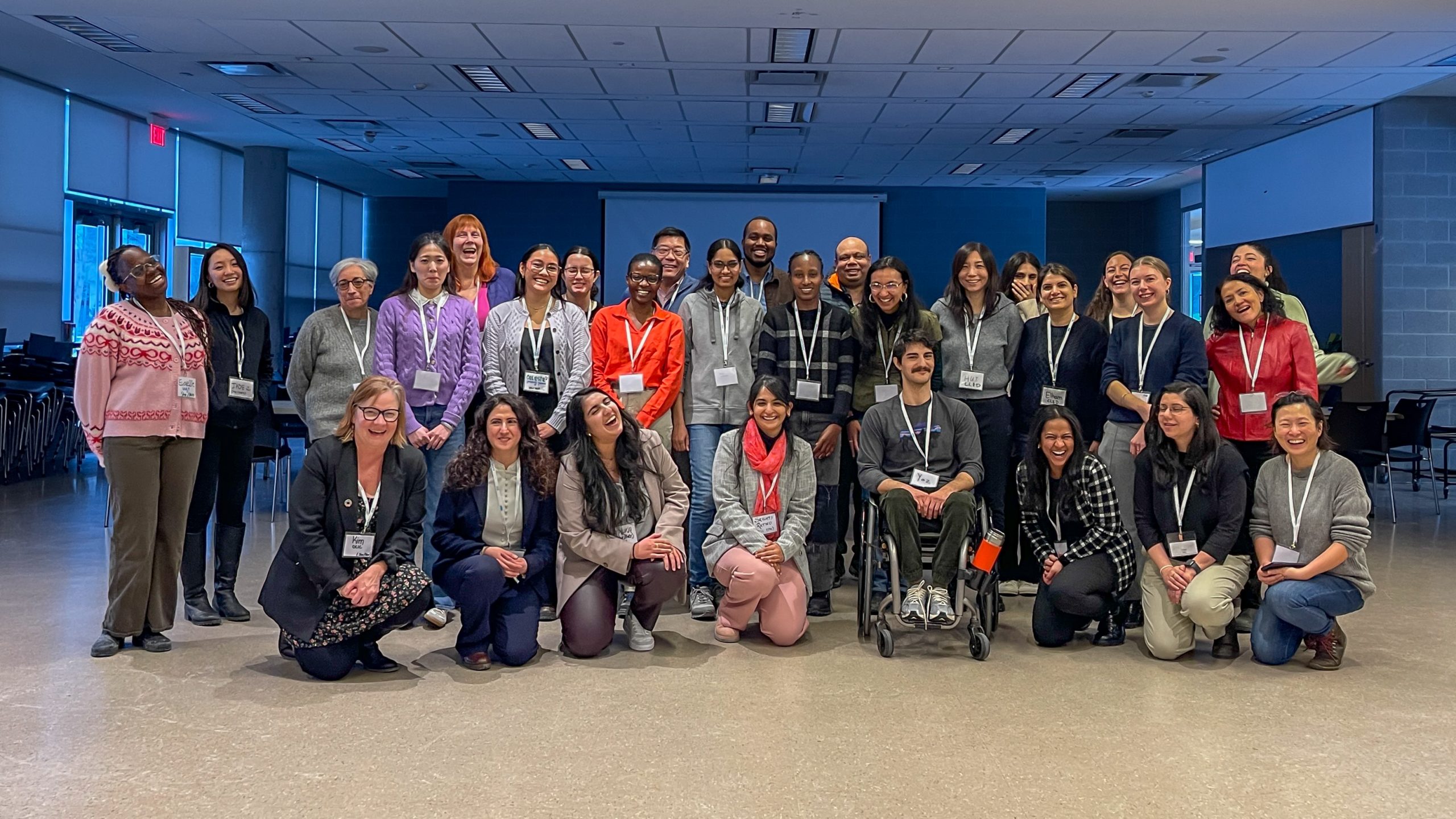
We wanted to take a moment to share a recap of the Knowledge for Change Tkaronto Hub’s (K4C’s) Innovation Lab: “Centering Community Participatory Knowledge in the Age of AI” that took place on January 30th and 31, 2026.
This two day, in-person, exploratory lab brought together leaders within local and global development organizations, early-career practitioners and students, and newcomer community researchers and organizers in Regent Park to be in dialogue about how AI is showing up in our lives–invited or uninvited–and the questions, concerns, and curiosities it is surfacing.
On day one, we began with a formal welcome from the K4C Tkaronto Hub, featuring remarks from the Ontario Council for International Cooperation’s Executive Director Kimberly Gibbons, Immigrant Women Integration Program Lead at the Toronto Centre for Learning and Development Elham Rasoulian, and Knowledge Equity Lab Director Leslie Chan.
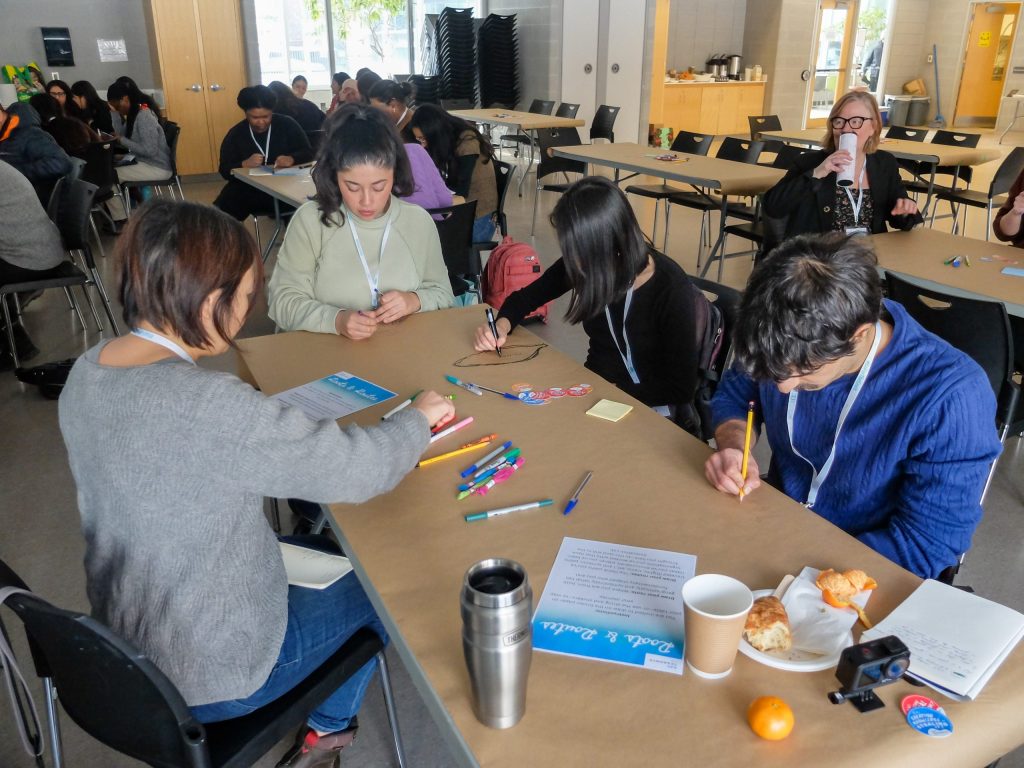
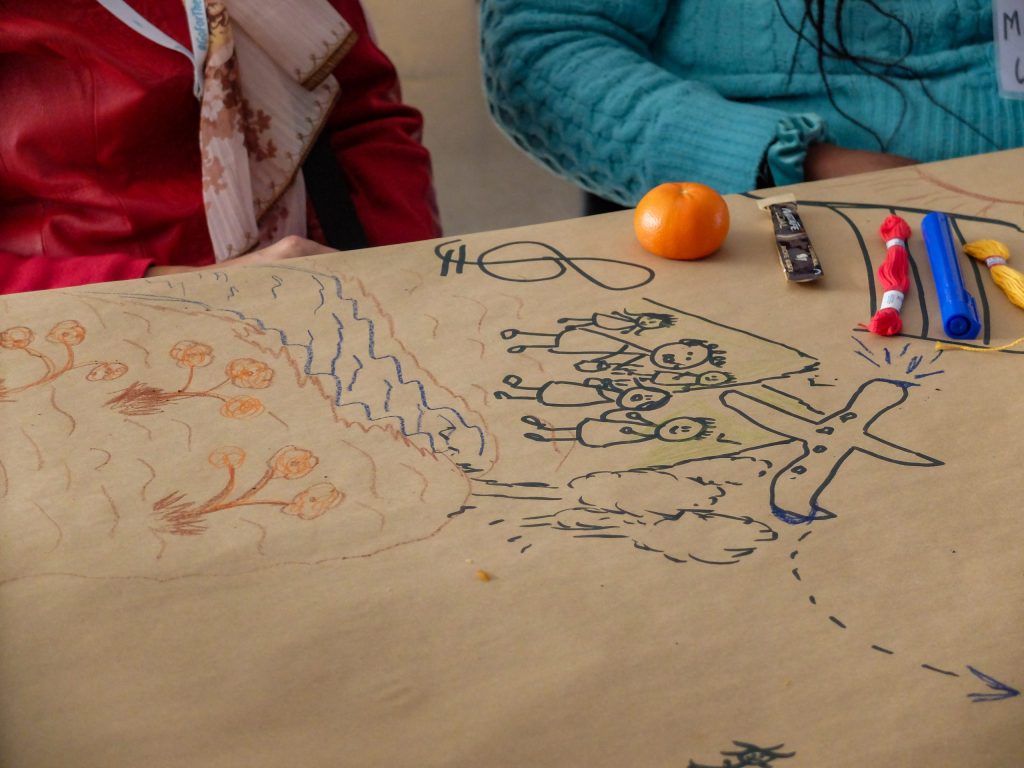
This was followed by a visual mapping activity, Roots and Routes, facilitated by Malika Daya from the Knowledge Equity Lab. This exercise was created by Indigenous theatre practitioner and scholar, Jill Carter for the project “We Are Here” with First Story Toronto Tours. Malika facilitated an adaptation of this activity for our community, and we collectively reflected on Carter’s provocation to reflect upon how we are situated in relation to the land and the stewards of this land. How did we come here? From where? What have we brought with us? What was left behind? What might be worth preserving and sharing with (not imposing on) others?
Lab participants were invited to draw their literal, metaphorical and symbolic roots, and the routes they’ve taken to be on this land. This exercise was also designed to invite participants to reflect and welcome the diverse ways of knowing and being into the room.
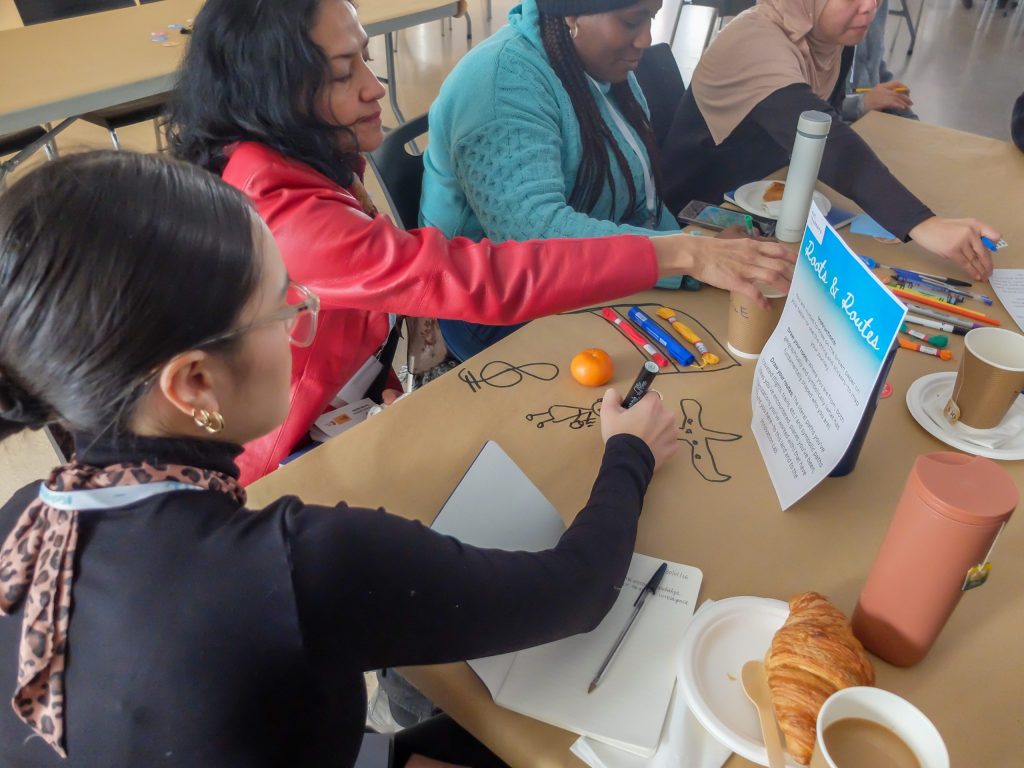
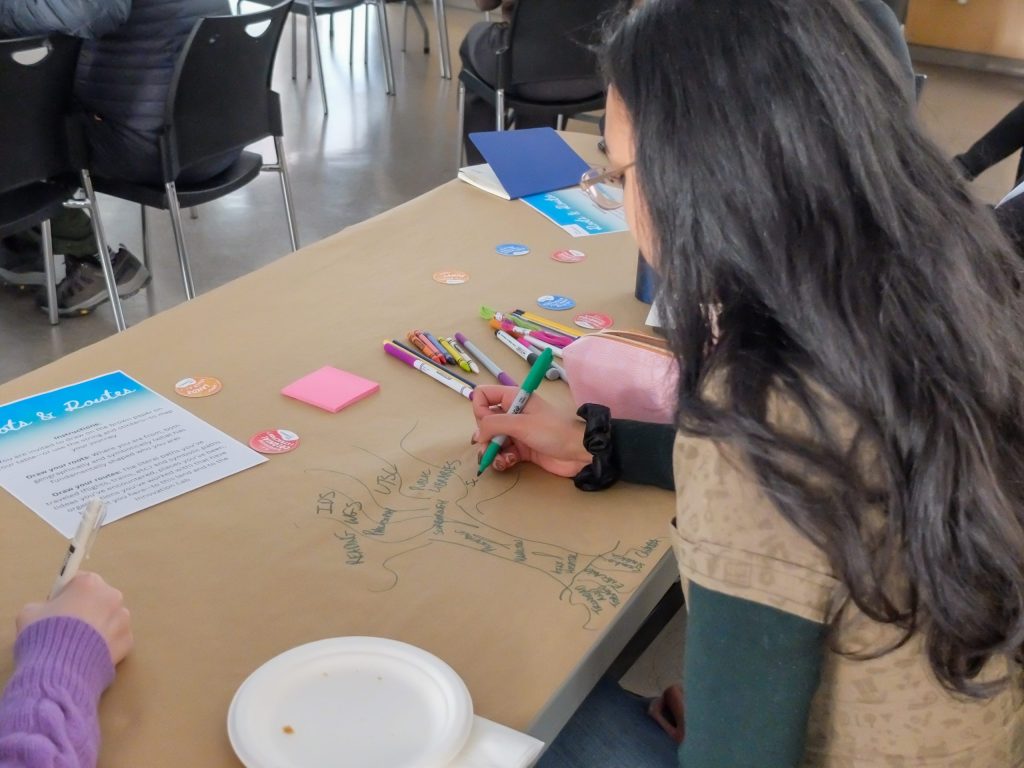
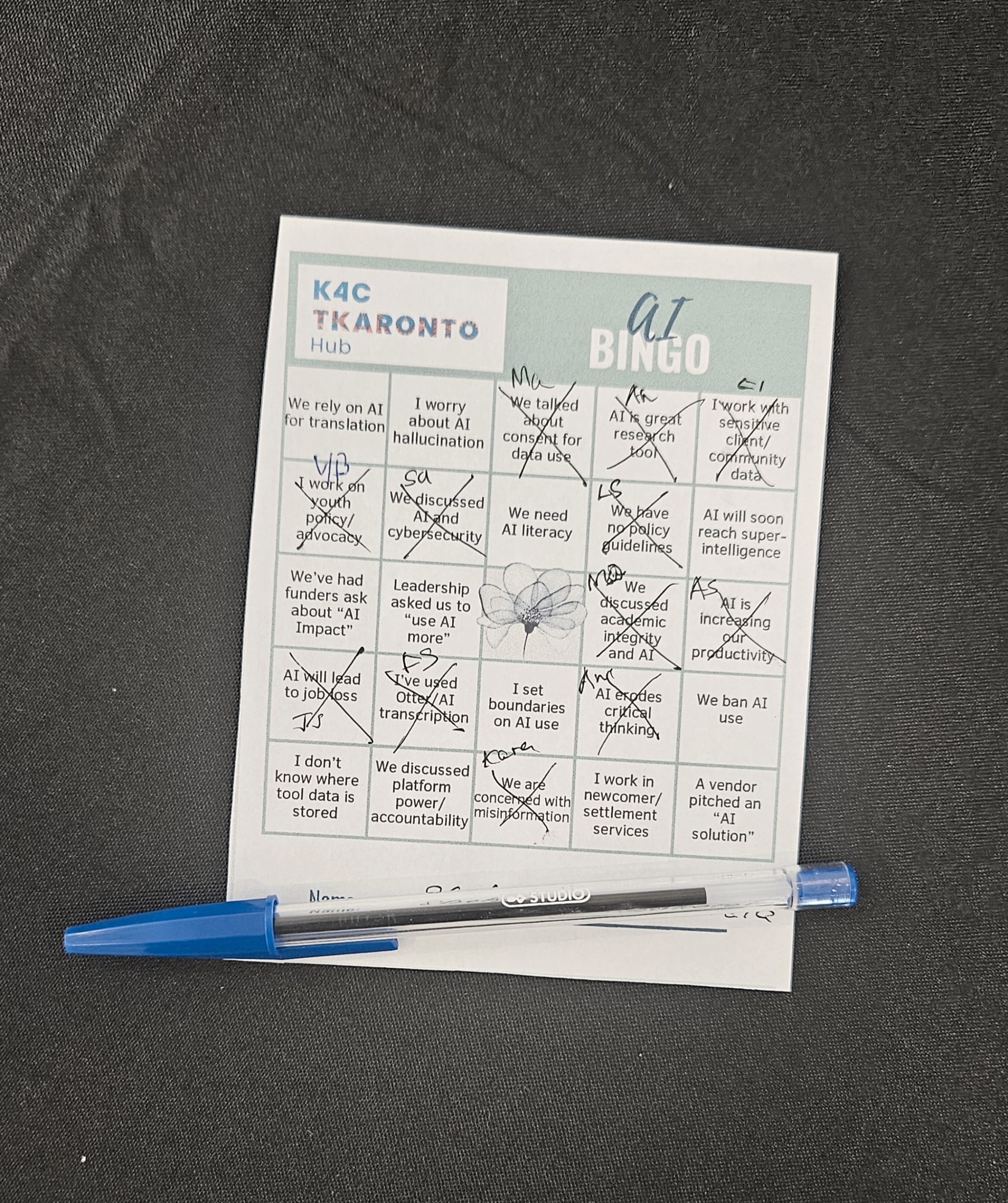
Following Roots and Routes, Leslie Chan, facilitated AI Bingo – which was an opportunity to both break the ice and get to know who is in the room and their perspectives on AI. (Check out the AI Bingo Sheet in the photo gallery below!)
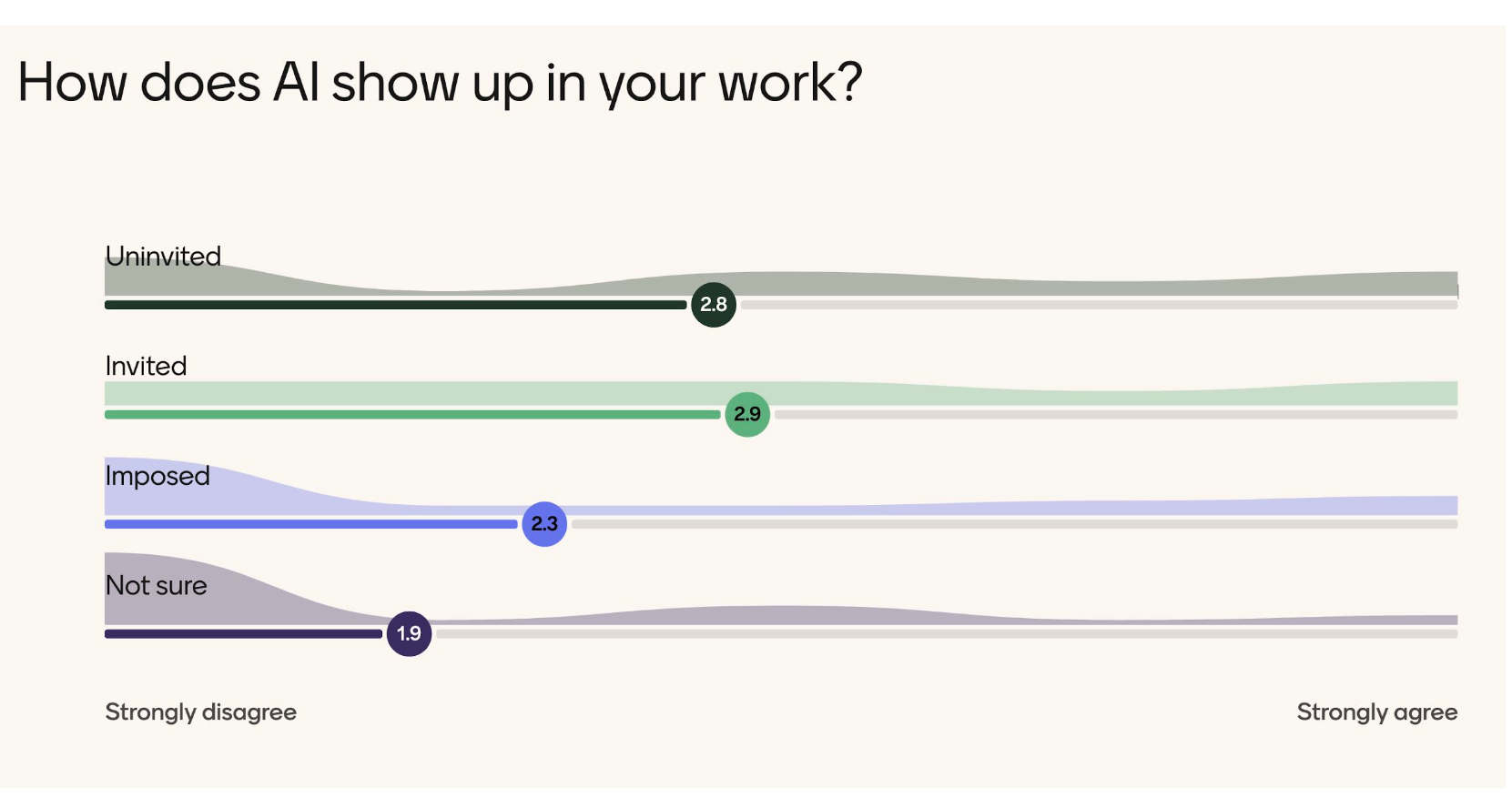
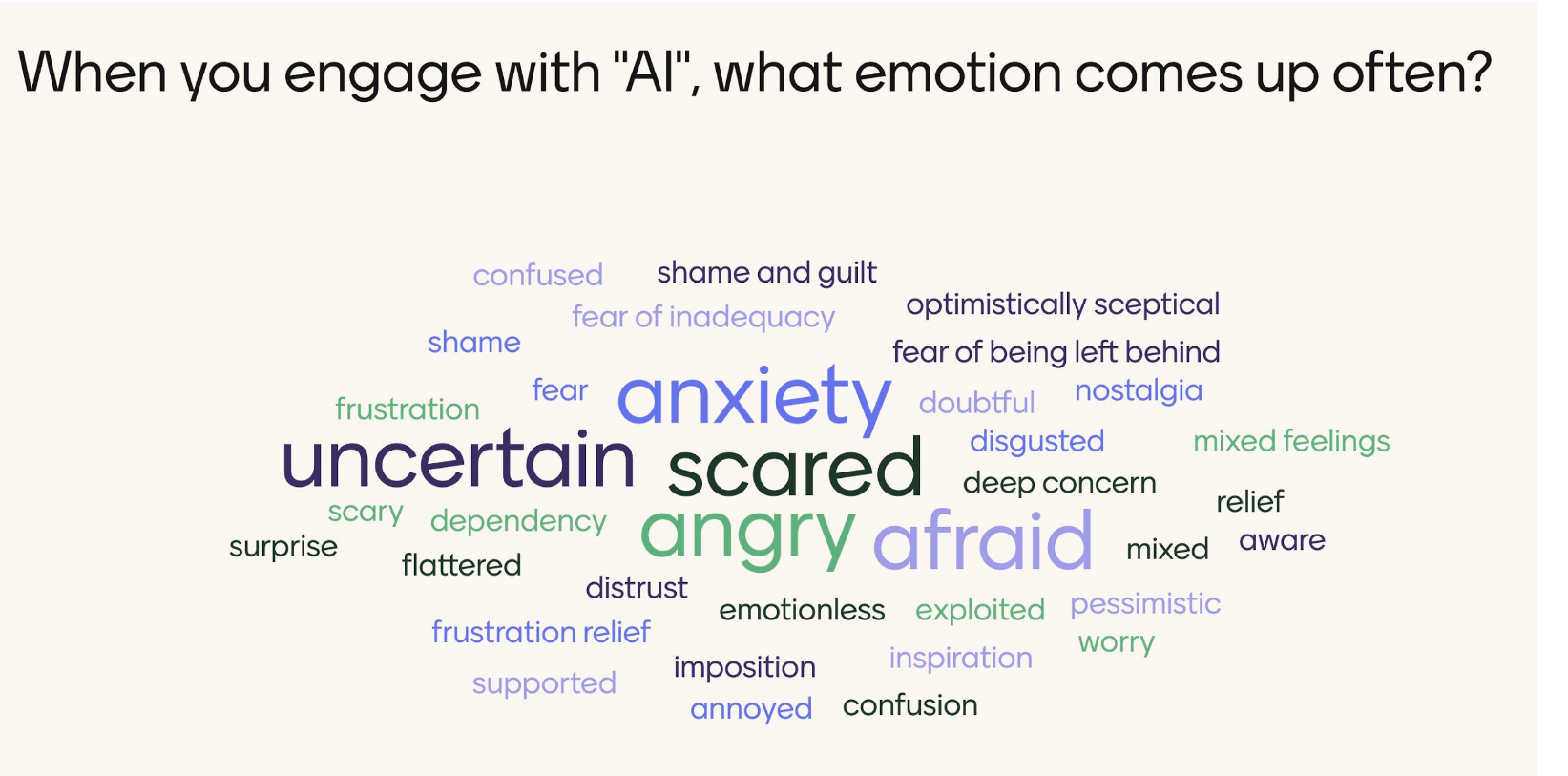
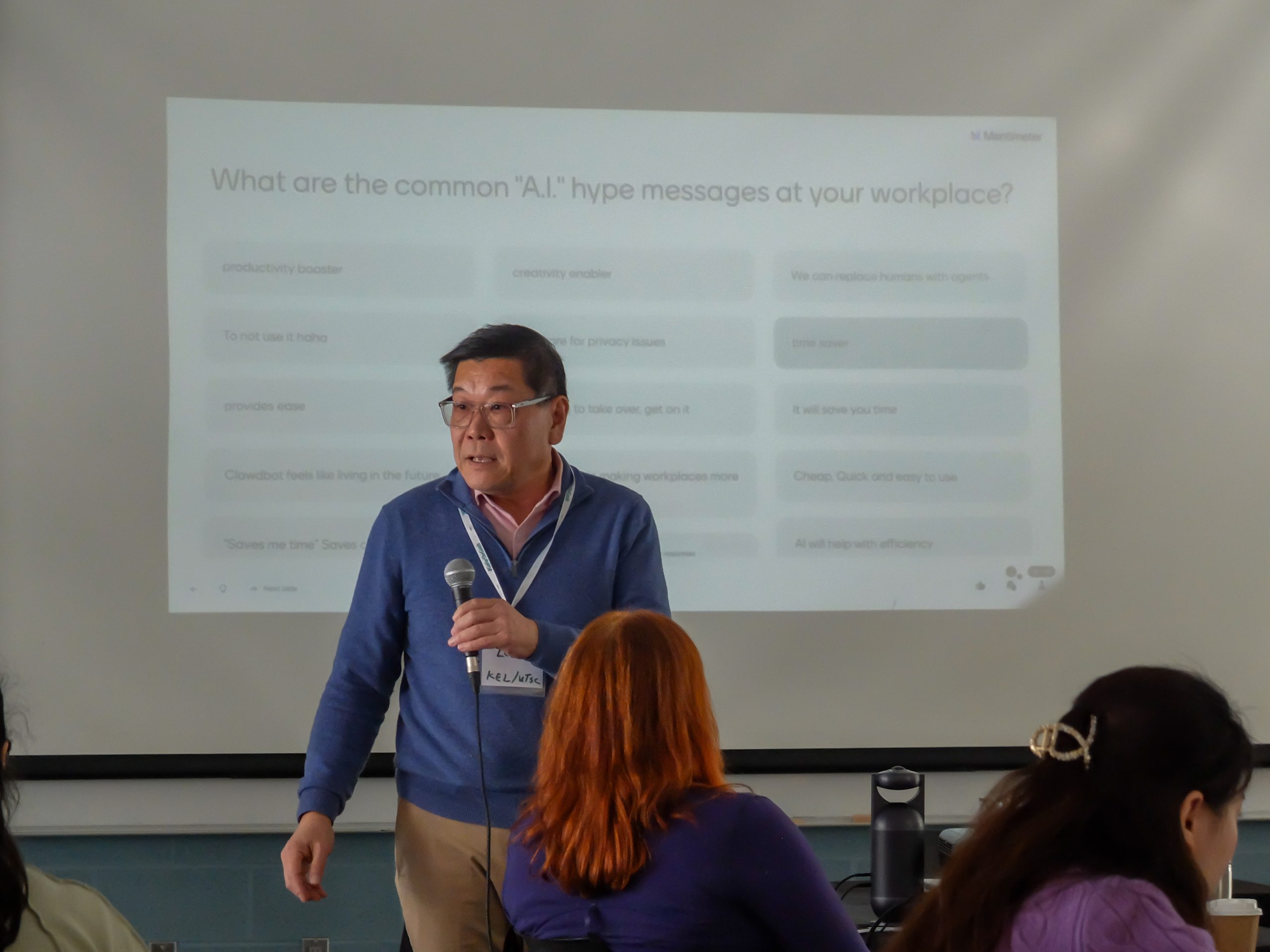
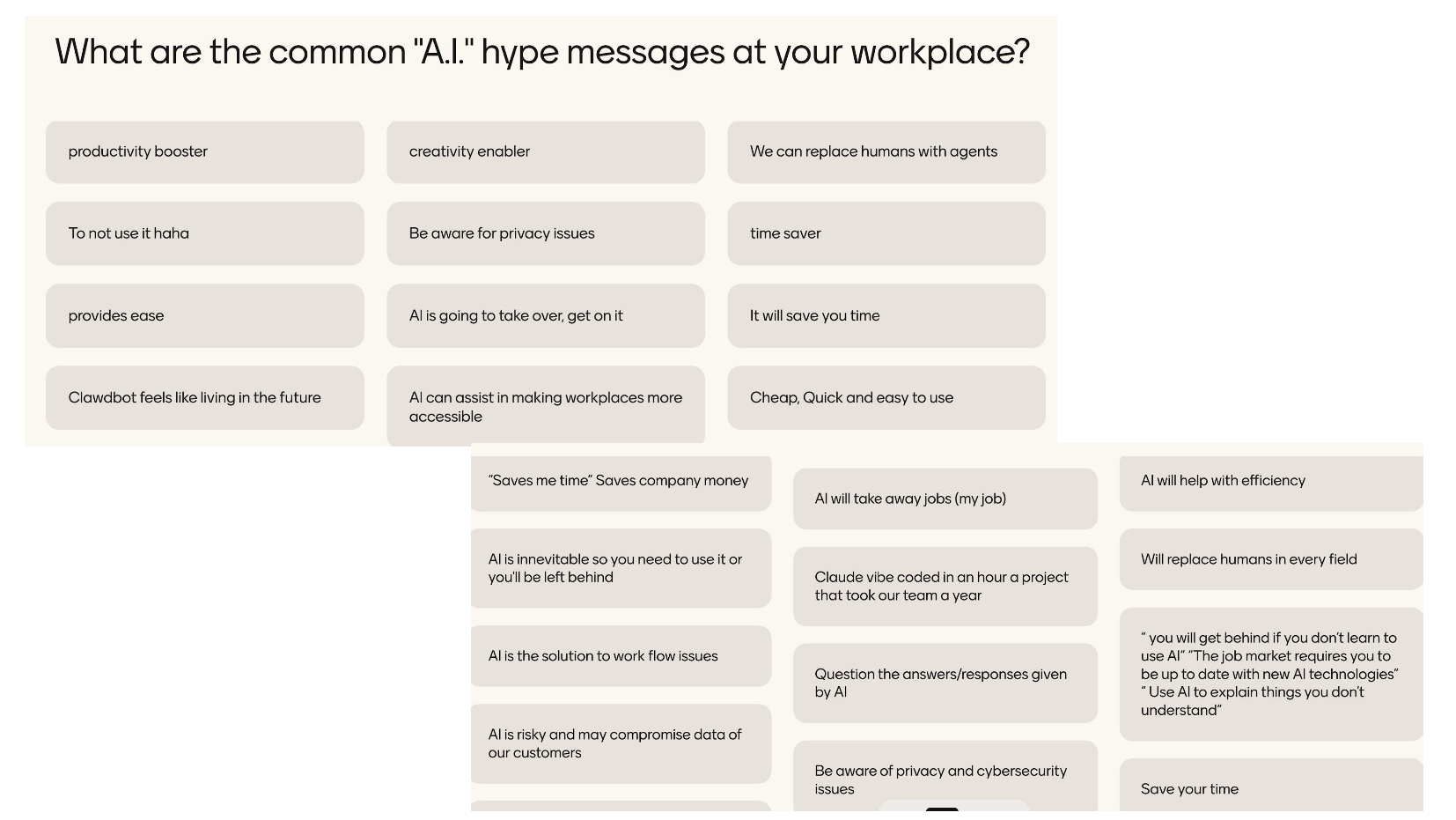
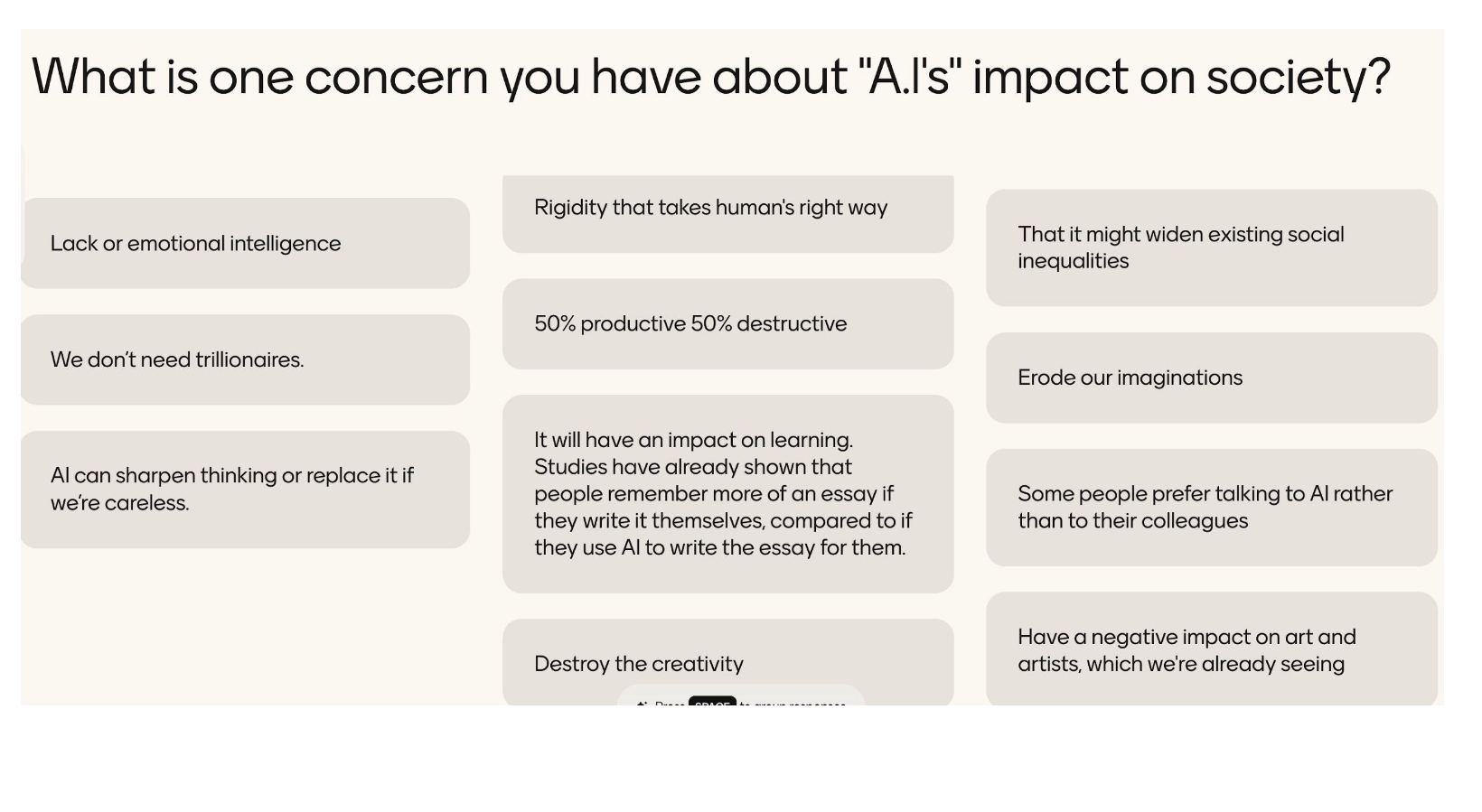
Following AI Bingo, using mentimeter, we had an interactive discussion where Leslie posed the following questions to the group: In one word, what immediately comes to your mind when you think of AI? What are common AI hype messages in your workplace? What is one concern you have about AI’s impact on society? How does AI show up in your work: inhibited, uninvited, imposed or not sure? When you engage with AI, what emotion comes up most often?
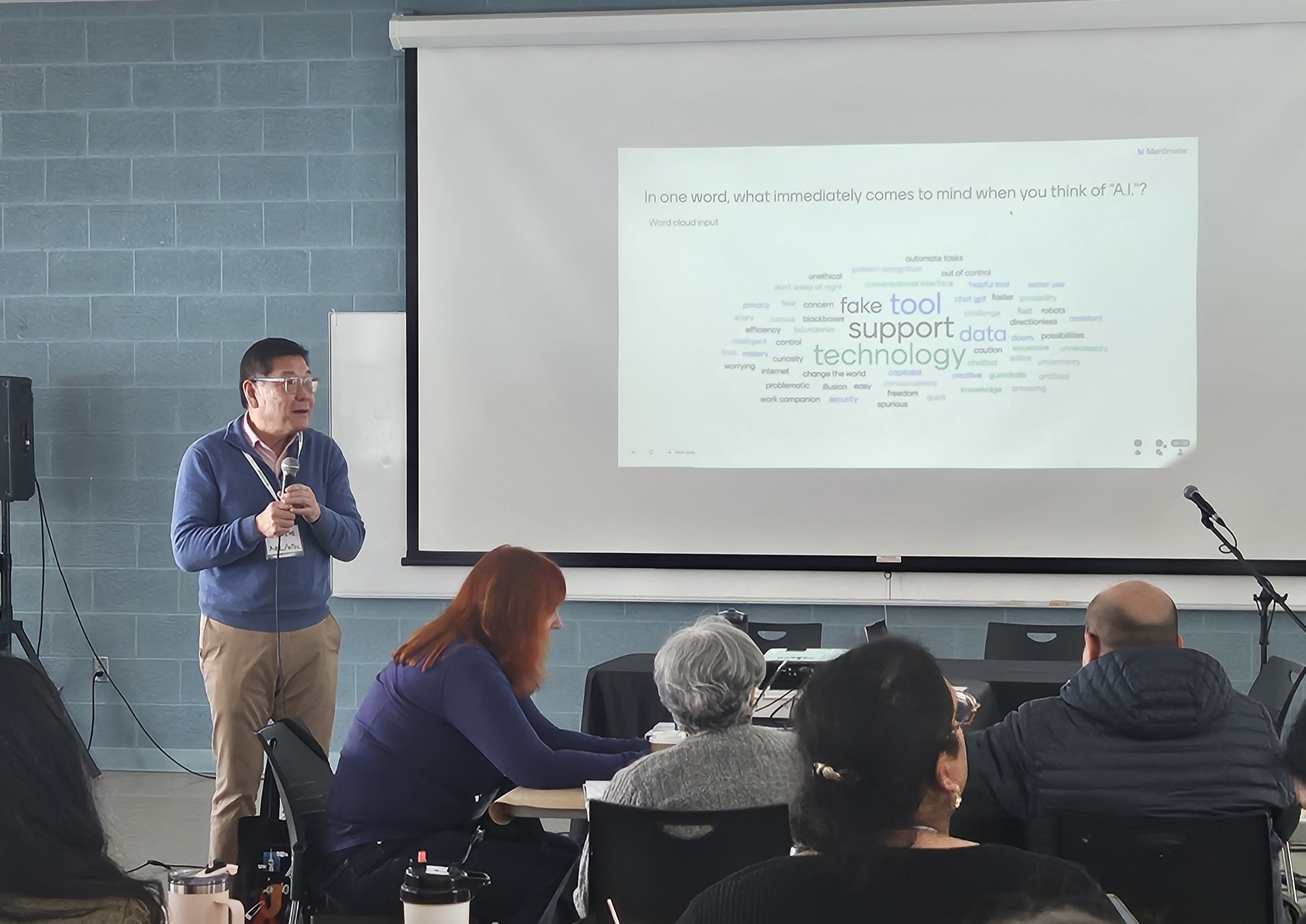
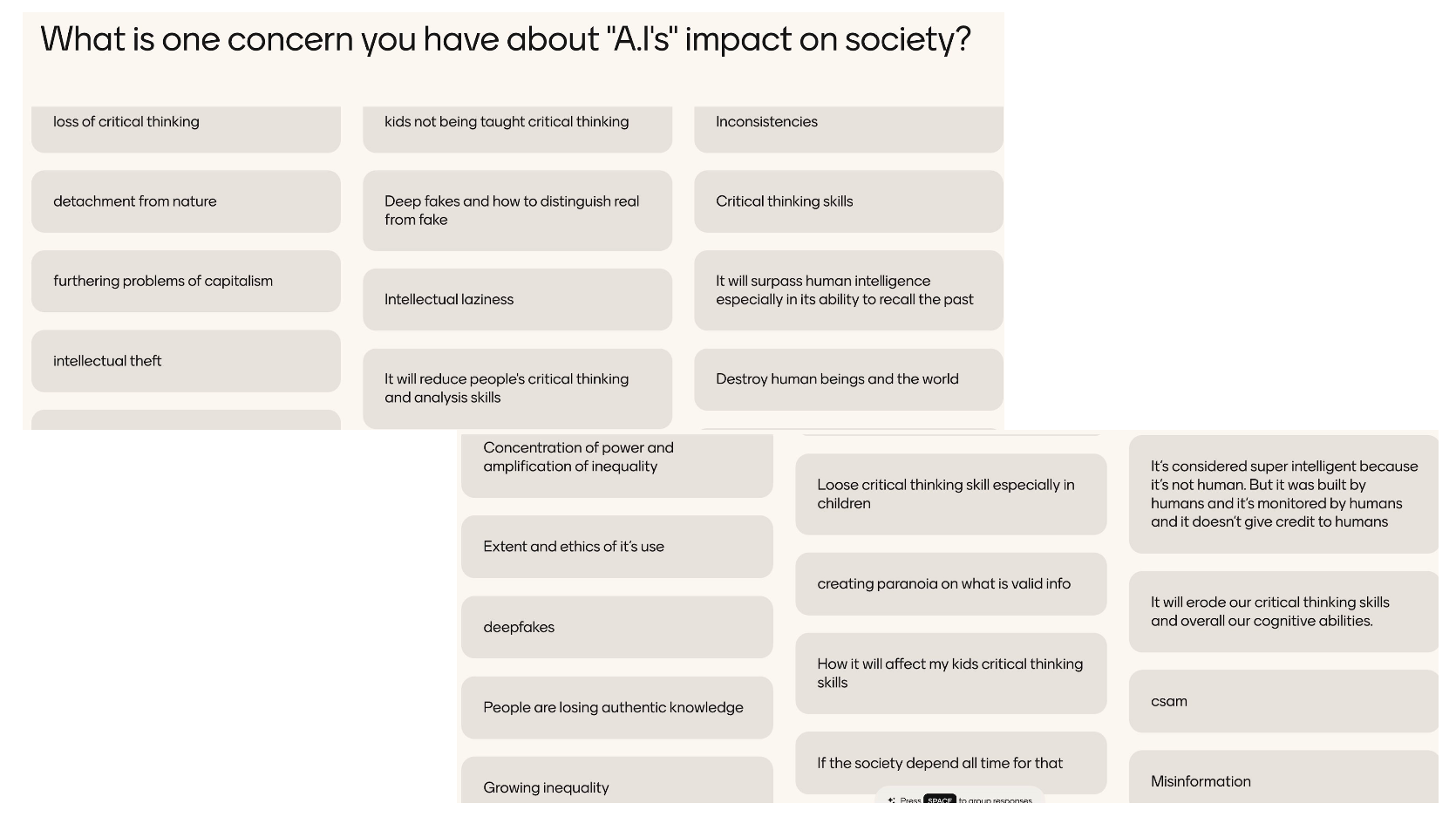
A striking question that illustrated vivid, visual representations of the participant’s perceptions towards AI was: “What metaphor would you use to describe AI?” In which the following surfaced: AI as an authentic imposter, AI as a bloodthirsty vampire, a wolf in sheep’s clothing, an assistant or intern, a narcissistic fake friend, or a mind thief. Emergent in our conversation were concerns around the future of critical thinking and creative imagining, and challenging the narratives of “inevitability” Big Tech is imposing onto our communities.
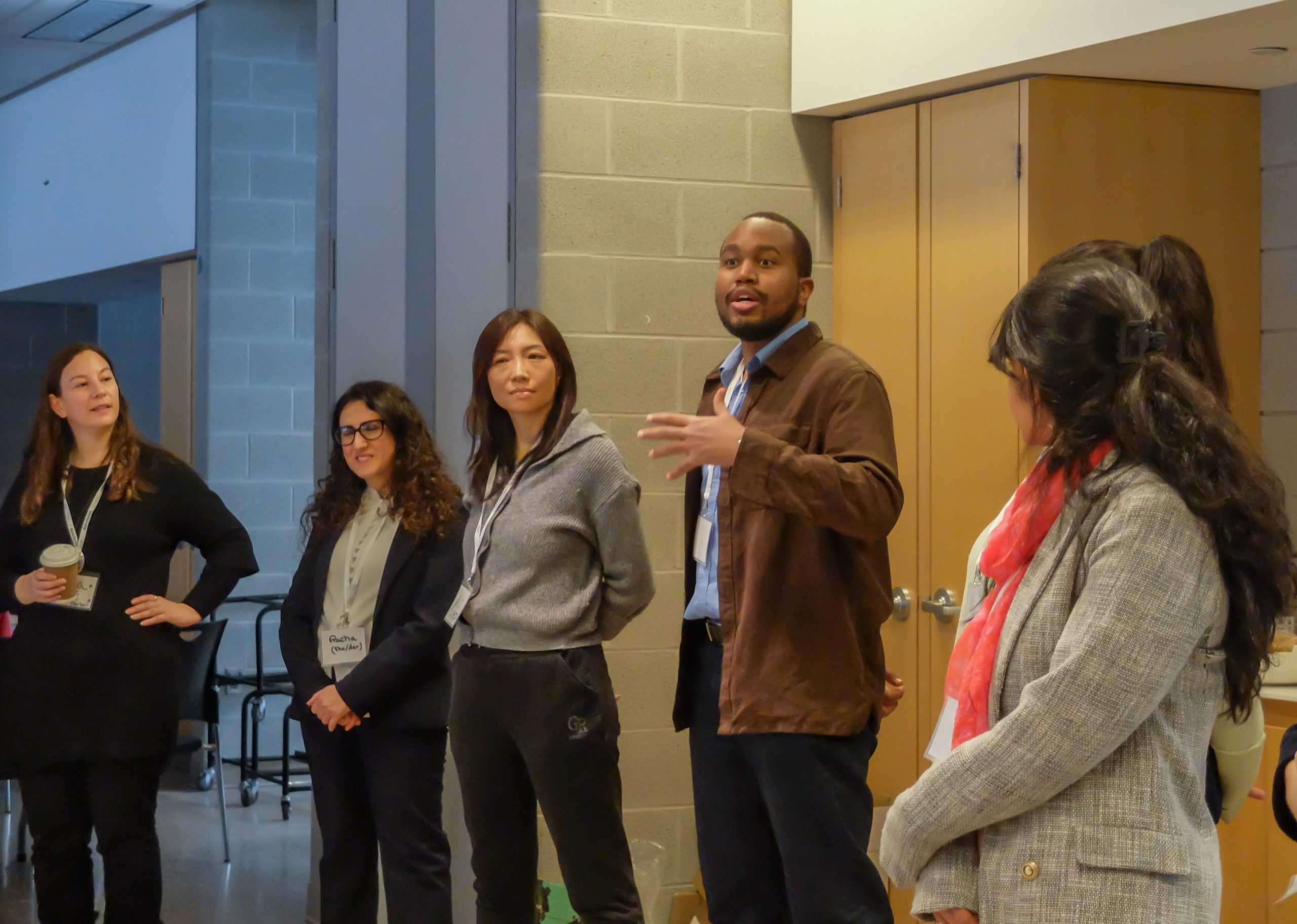
In the afternoon we had a panel discussion, “Grappling with AI: Ethics, Labour and Strategy in Our Organizations” with Bella Lam, CEO of The Jane Goodall Institute of Canada, Anna Jasinska, Associate Manager of Communications, Development, and Operations of the Toronto Centre of Learning and Development, and Rajaa A. Berry, an OCIC Youth Policy Hub alum currently interested in sustainability and renewable energy policy.
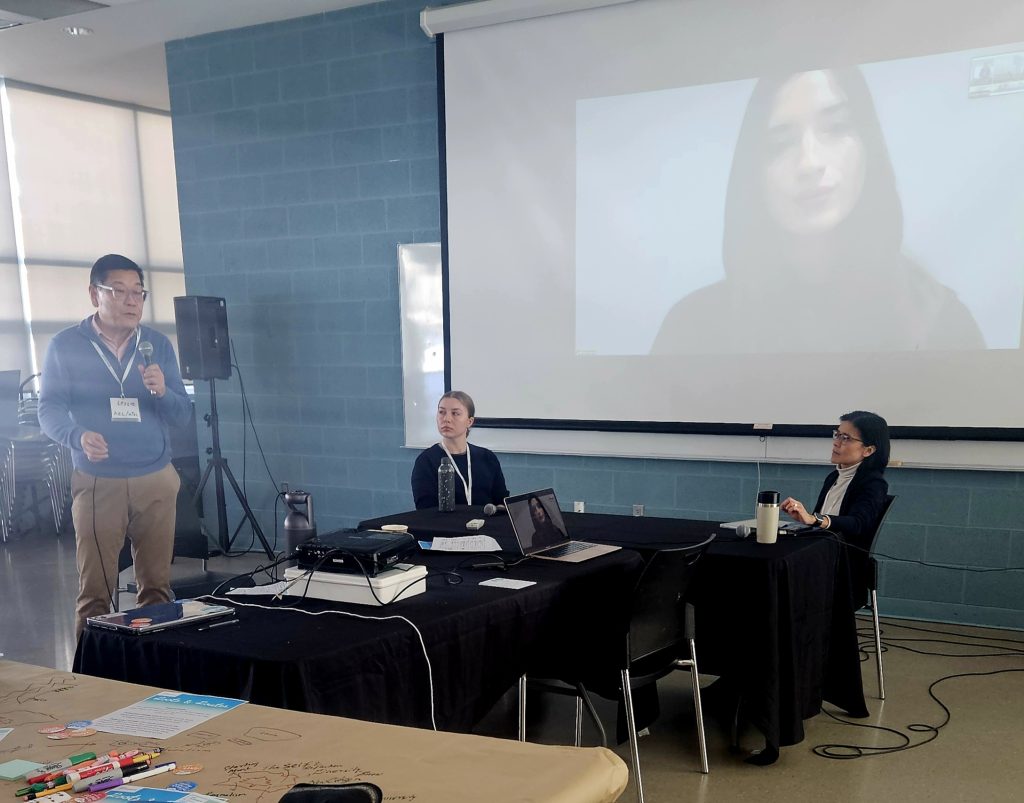
One of our lab participants Yagiz Boran, and past OCIC Youth Policy-Maker Alum writes, “One of the most striking points raised in the panel was that ‘so much of what we do today is embedded in technologies we no longer think about — where they come from, whose ideas are inside them, and what kinds of labour make them possible.’ This widespread framing of AI as an inevitable efficiency tool conflicts directly with mission-driven, community-rooted work that depends on trust, relational accountability, and ethical restraint.”
After the panel, we had a participatory theatre workshop facilitated by Malika Daya. This playful workshop drew on Theatre of the Oppressed techniques, specifically Image Theatre, to explore ideas of power, surveillance, resistance and hope. Artist, activist, and policymaker Augusto Boal’s methodology of Theatre of the Oppressed, invites community members to move from being passive spectators into spect-actors, encouraging people at the grassroots to collectively imagine alternative futures and rehearse tactics of resistance to the everyday inequities they are facing.
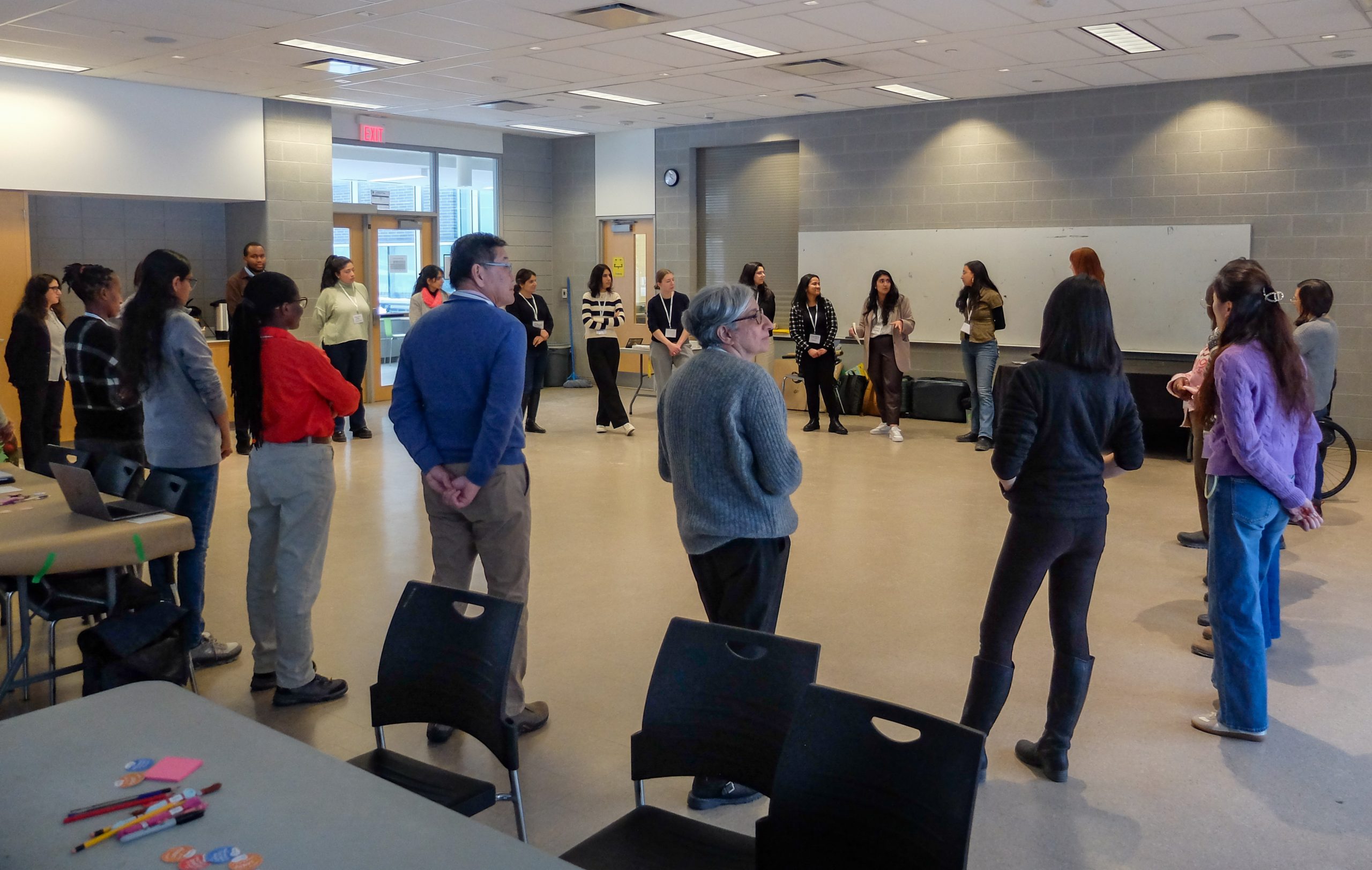
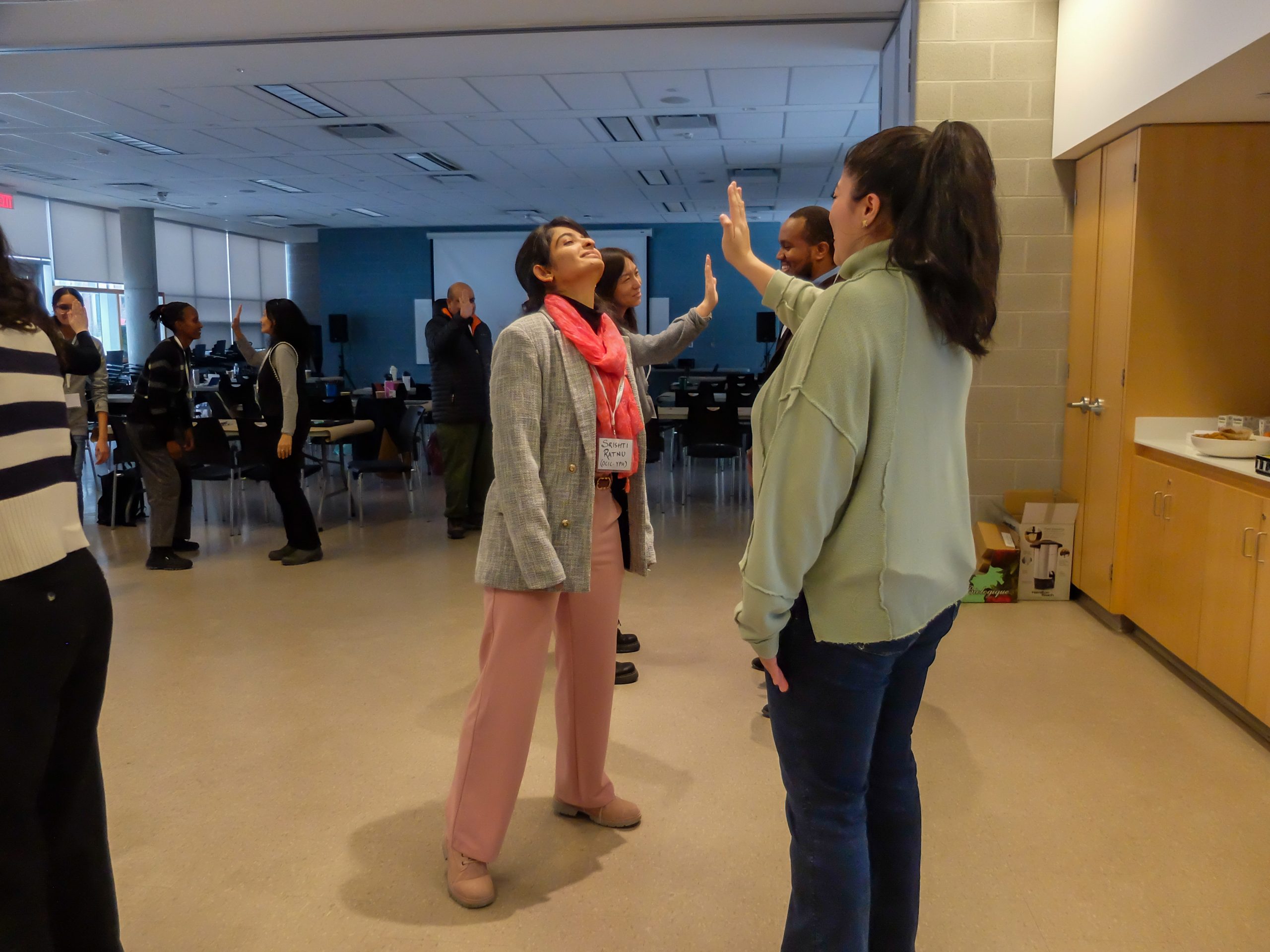
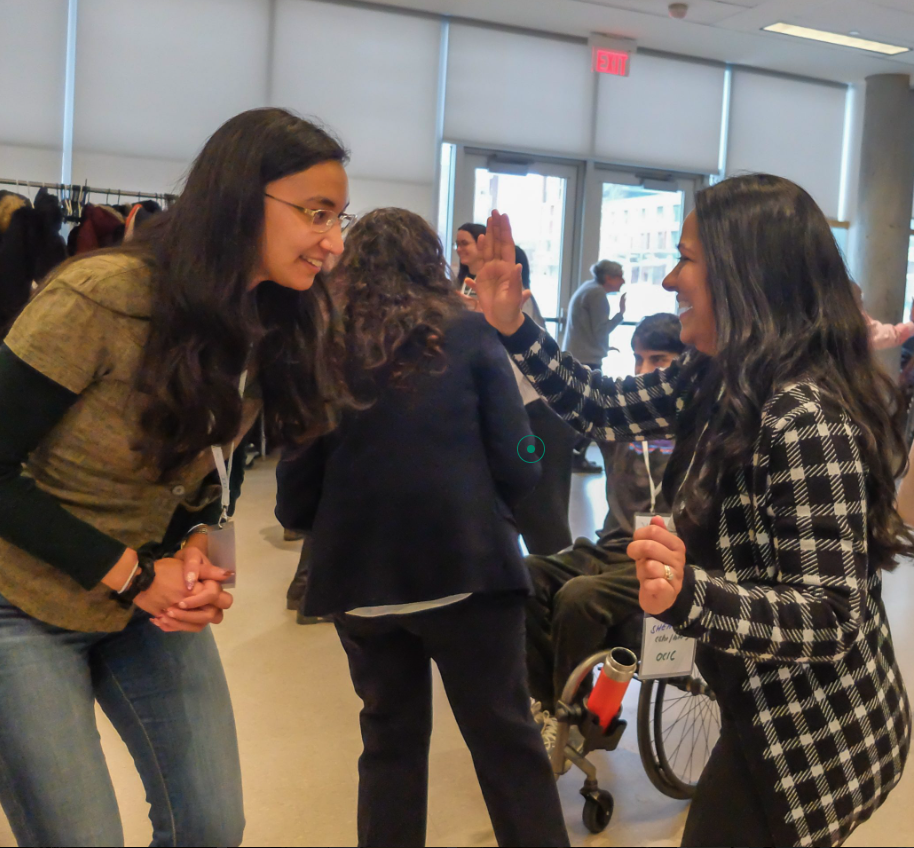
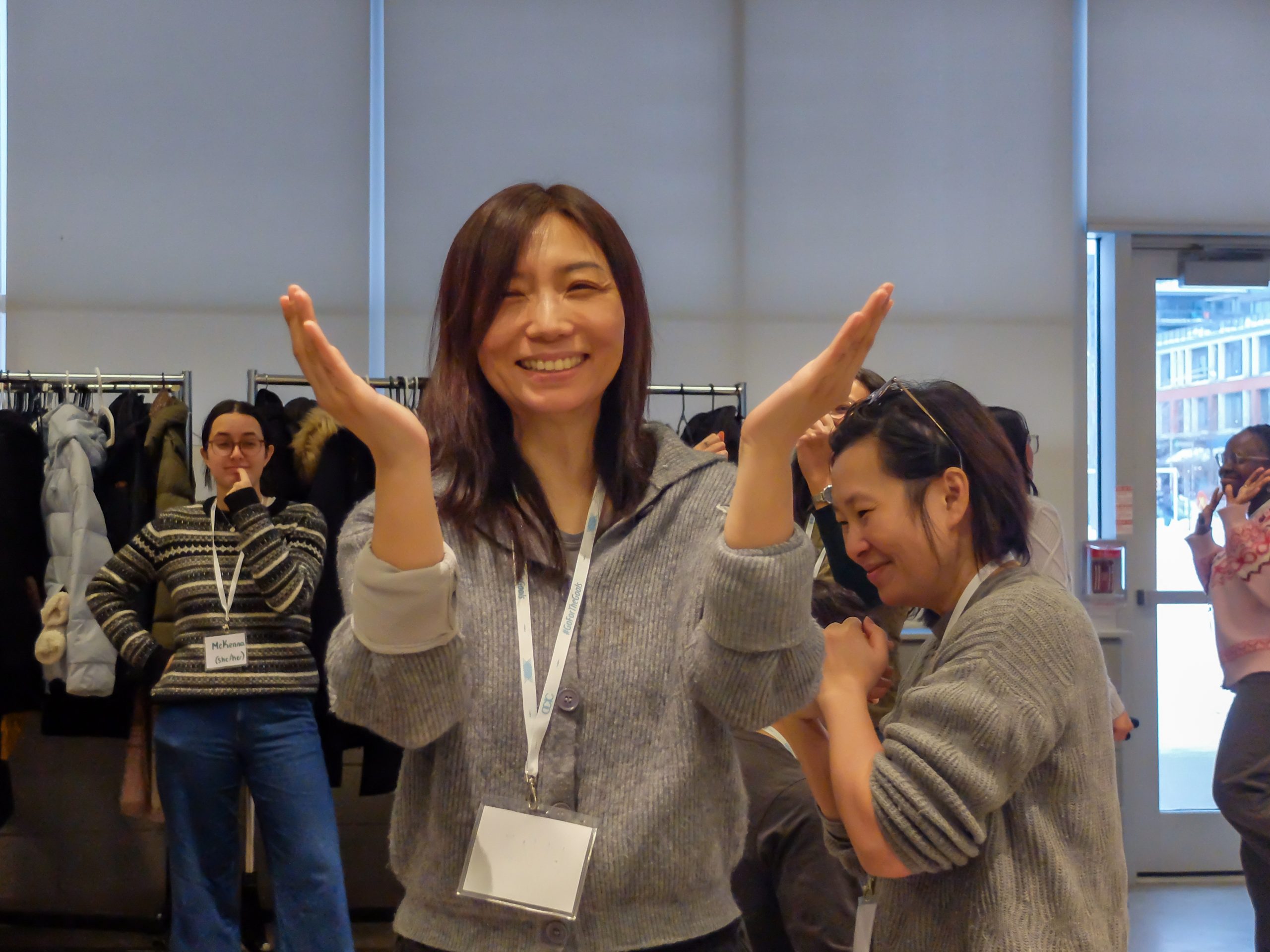
Innovation Lab participant and UTSC student Evaelle Mangle writes, “On my end, this activity helped me understand how AI has often been described to communities in seemingly “abstract” terms, essentially erasing its structural and political underpinnings. By ‘acting out’ concepts, I believe we were all given back the power to recenter our own understanding of Artificial Intelligence’s impact on our own lived experiences.”
We wrapped up the day with laughing yoga, facilitated by Leslie Chan, an opportunity to release the tension we may be holding, as we think through and feel the many emotions associated with grappling with the ethical challenges of AI through embodied practice.
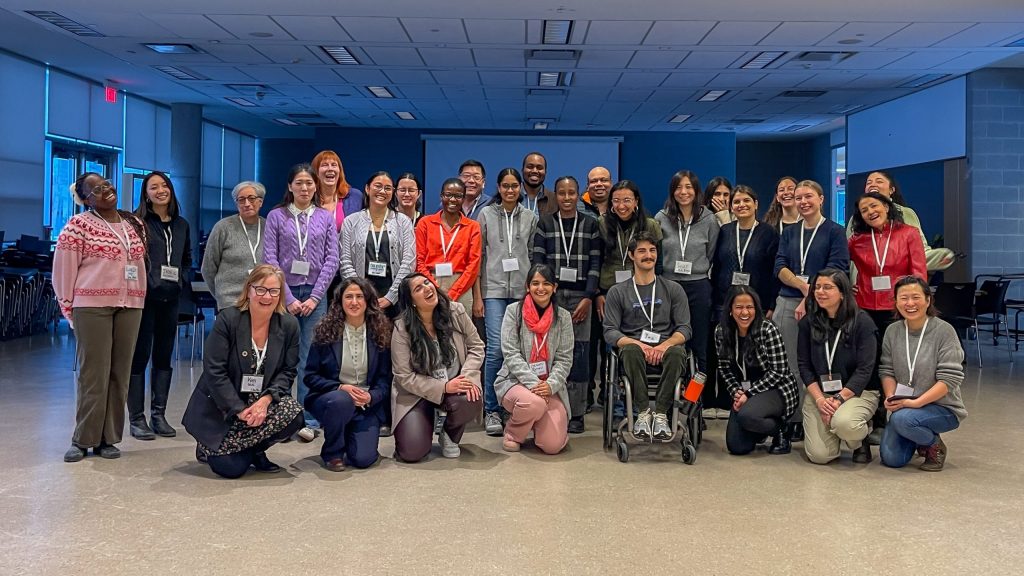
On day two, we turned toward imagining the futures we wish to build, exploring what resistance, transformation, and refusal might look like. We began with a panel, “Why Affect and Emotions Matter in AI,” featuring Megan Boler, Professor and Associate Department Chair at OISE; Noah Khan, PhD Candidate in Social Justice Education at OISE; and Jade Huang, Grief Tender and Sourcekeeper of the Sacred Grief Collective. The panel explored how emotions are socially produced, circulated, and mobilized in society, and how digital infrastructure is changing the ways we connect to ourselves and each other.
Yagiz Boran shared, “This panel reframed affect as a site of governance rather than an obstacle to it. Treating fear, anxiety, and discomfort as defects to be corrected obscures their function as collective signals of harm, exclusion, and power concentration. AI is infrastructural and political; the ethical burden lies with human responsibility. Ignoring affect in AI governance risks building systems that are efficient and scalable, yet profoundly misaligned with dignity, care, and democratic life.”
Emergent in this discussion were ideas about the infrastructure of relationality, and more specifically how feelings are becoming privatized as people turn to AI chat bots for emotional support. What happens to one’s ability to take risks, to be vulnerable in front of another, to bond with others, when feelings become “privatized?” This panel left us reflecting on what we value and what we refuse to lose, when it comes to our relationships and communities in the age of AI.
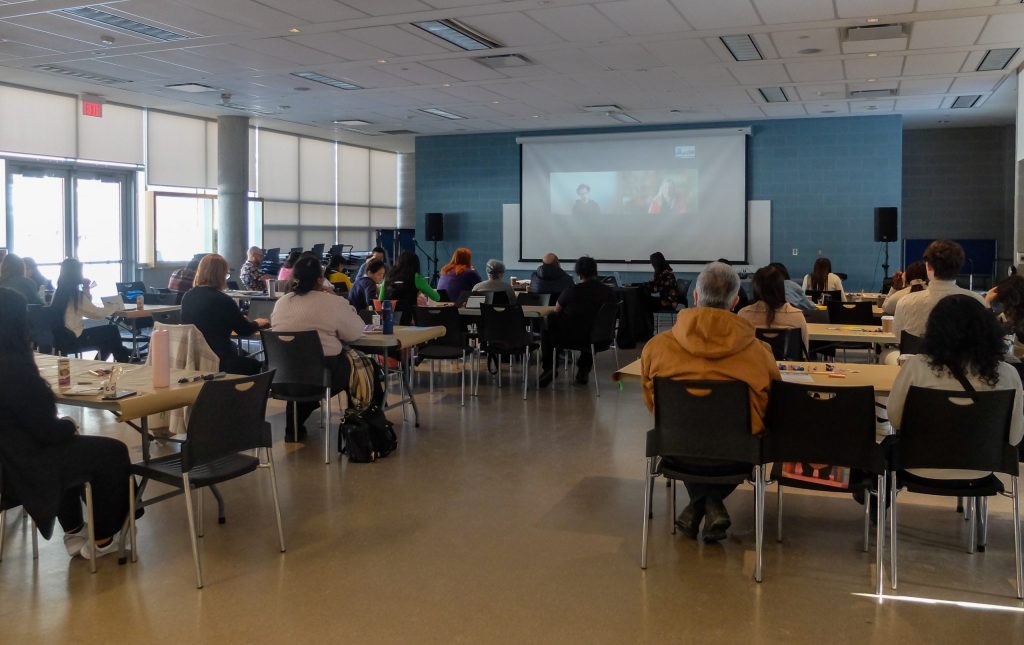
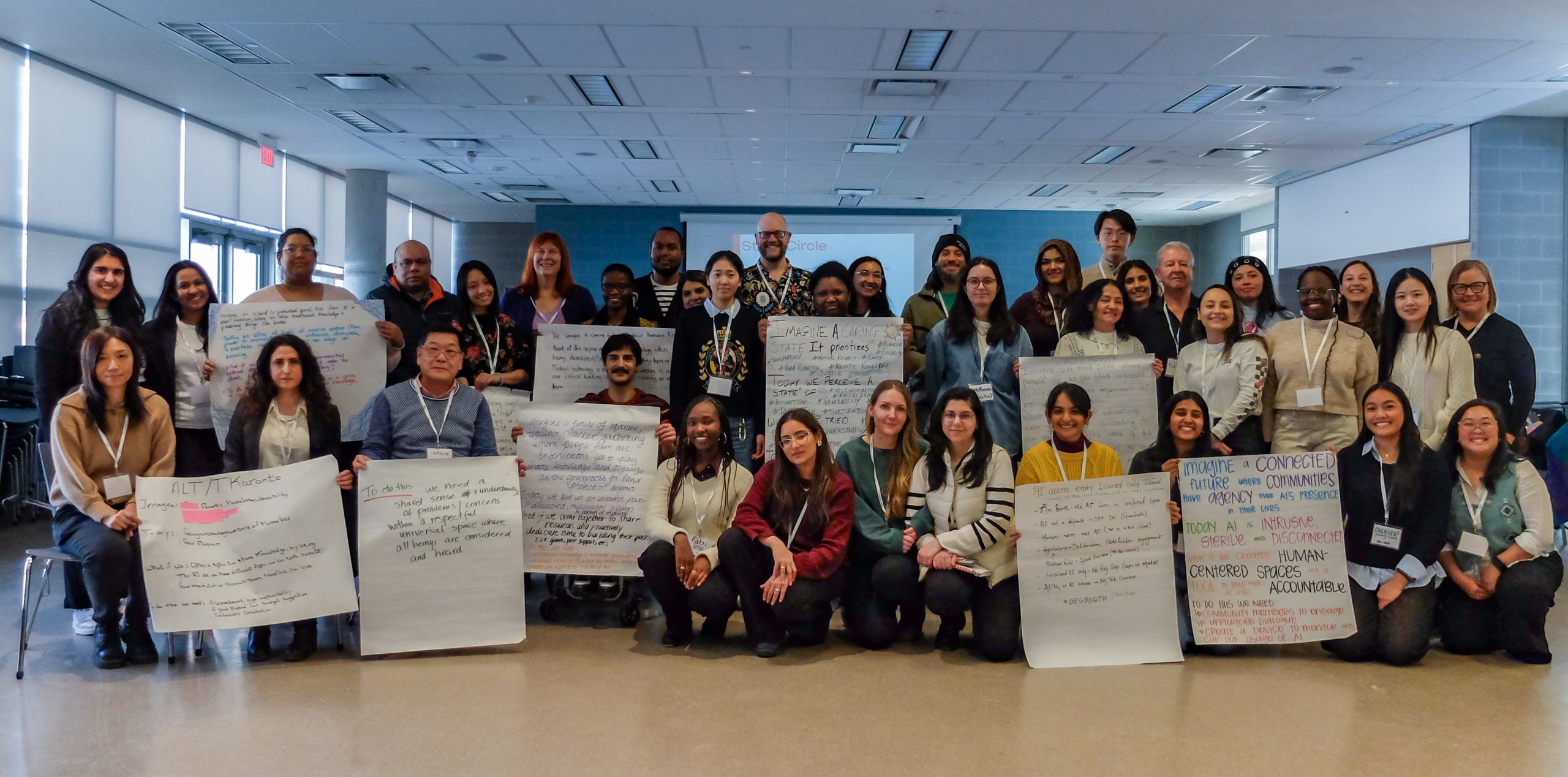
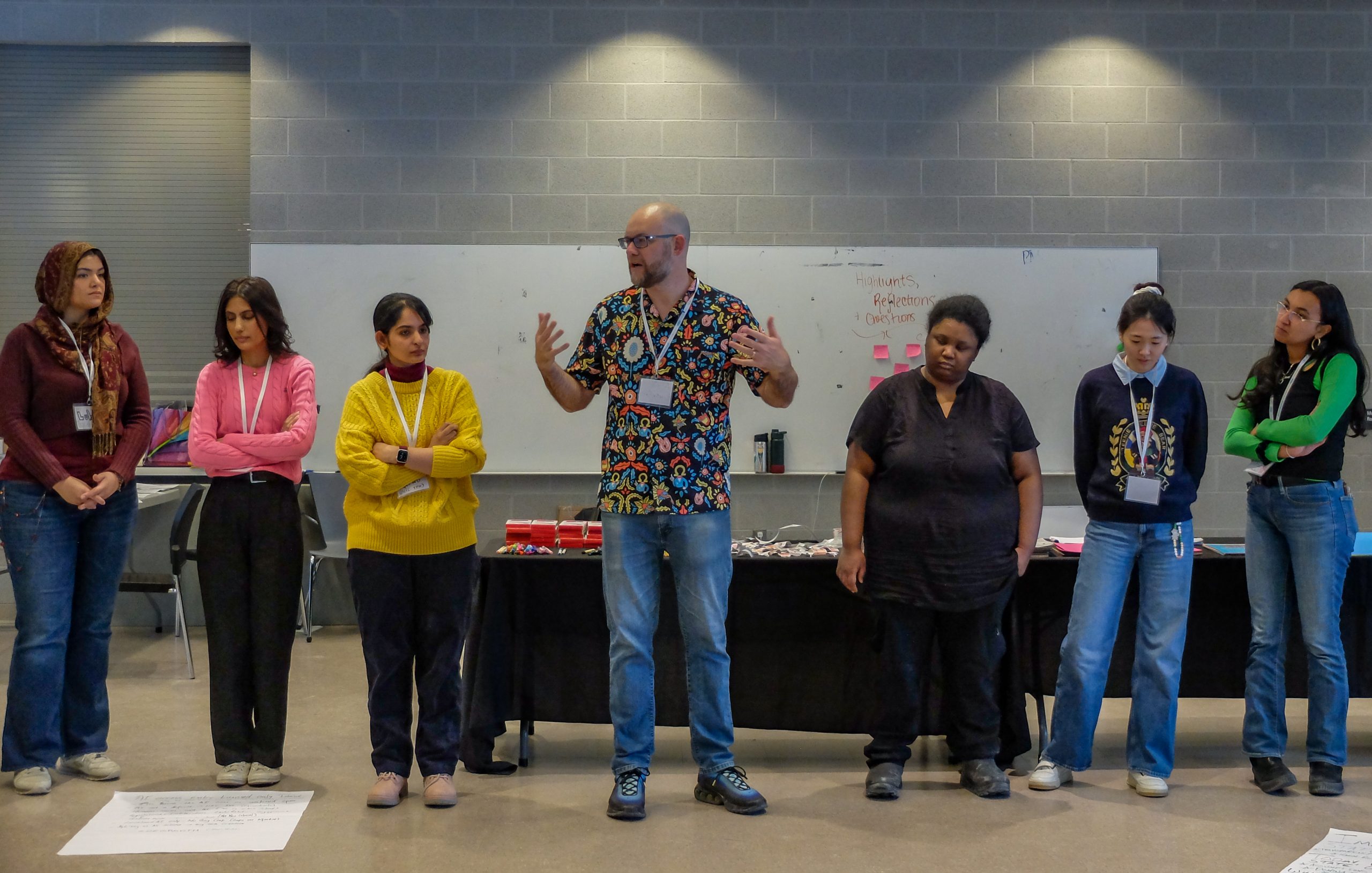
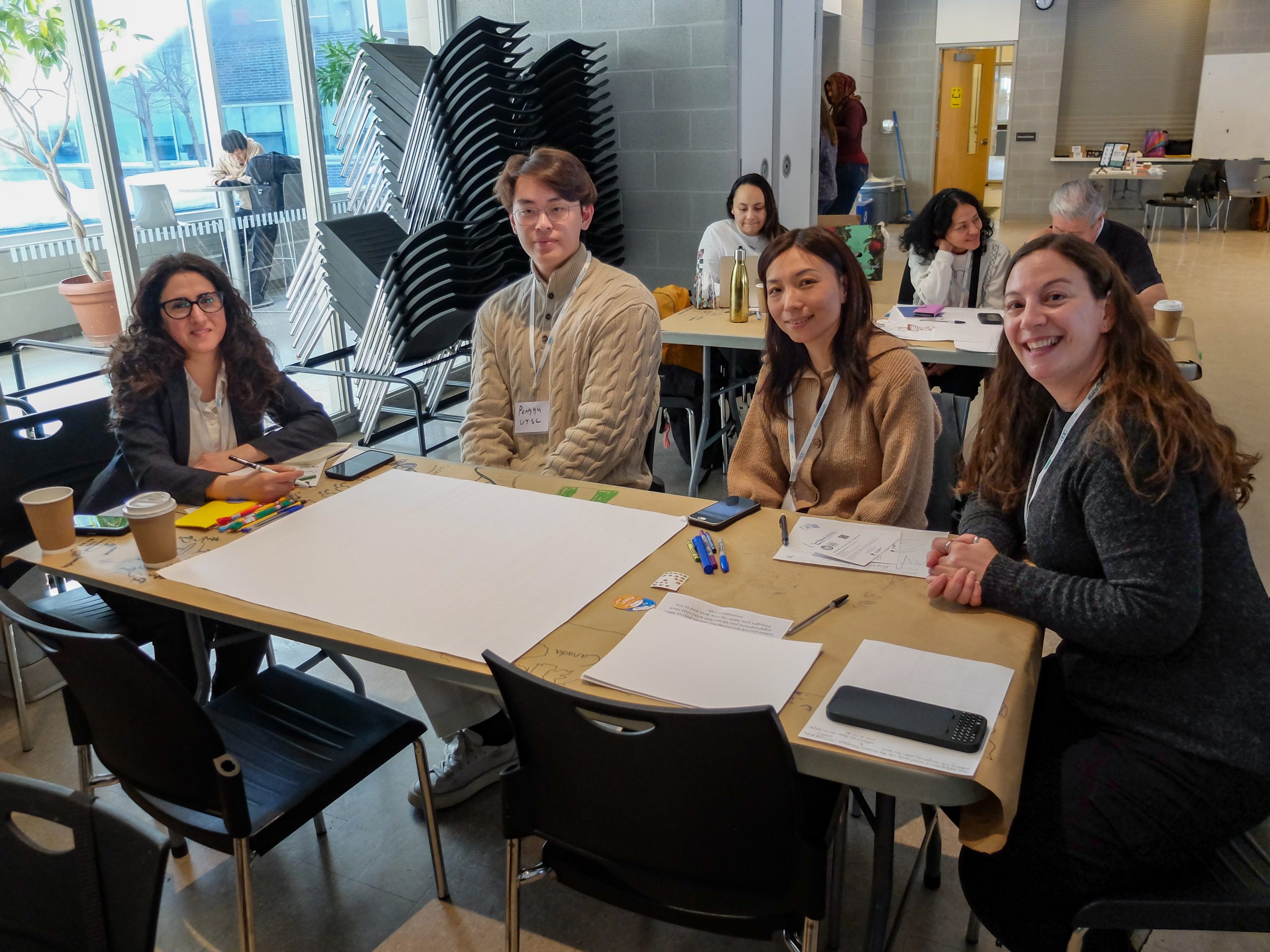
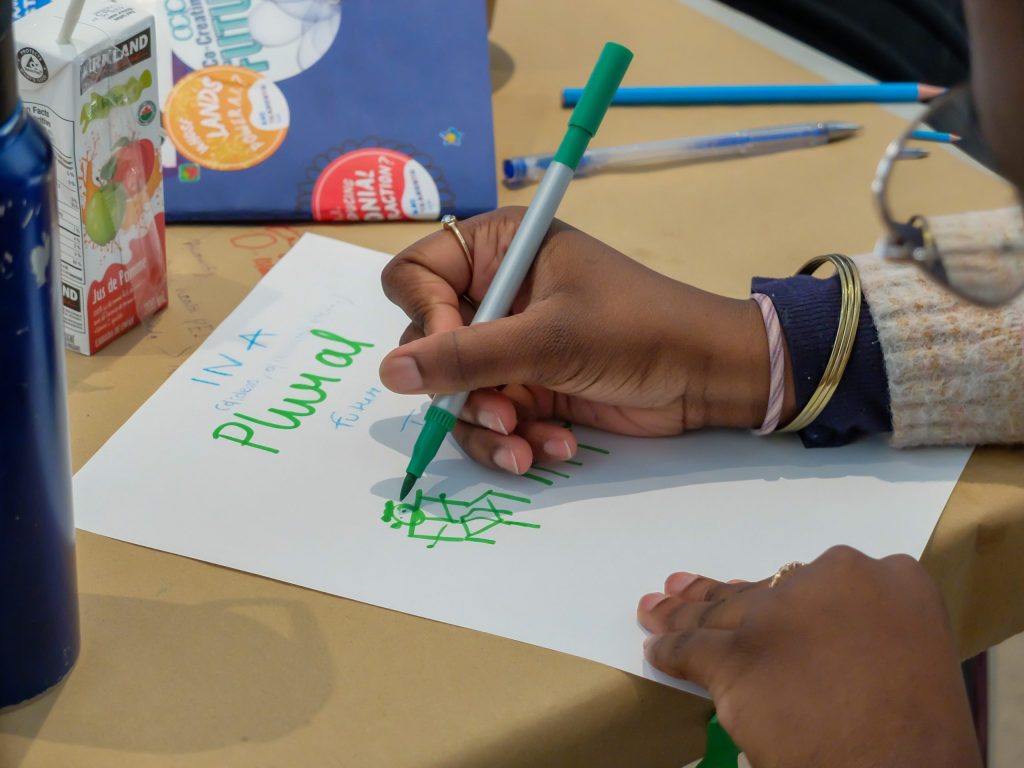
The panel was followed by a collective design sprint led by Alex Ryan, where participants began to craft tangible plans, projects, and programming from community spaces to AI policy. Alex offered the group guided prompts to reflect on, as we began visioning our imagined, plural futures. The prompts were as follows: In a (hopeful, dystopian, regenerative, relational, etc.) world, there is a (device, book organization, ritual, tattoo, manual, charter, etc.), related to AI resistance. We were asked to individually sketch what we were imagining and share back with our groups.
The next prompt was grounded specifically in dreaming of an alternative Tkaronto, where we began bringing together our individual visions to design our collective futures. The prompt read as follows:
Imagine… (a future state).
Today… (insert current state of things).
What if we.. (tried this)
To do this we need… (What are the conditions we need for our vision to thrive?)
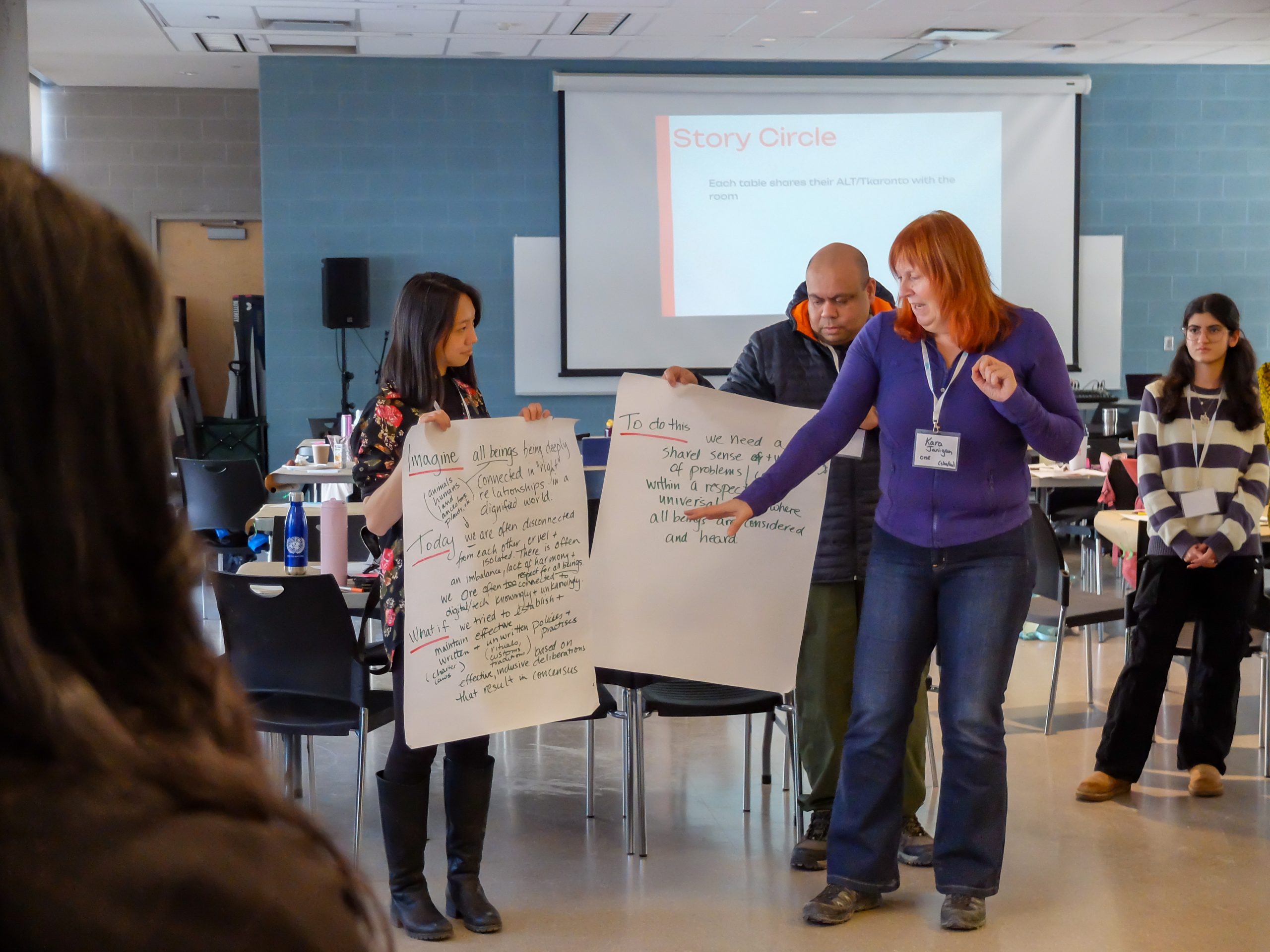
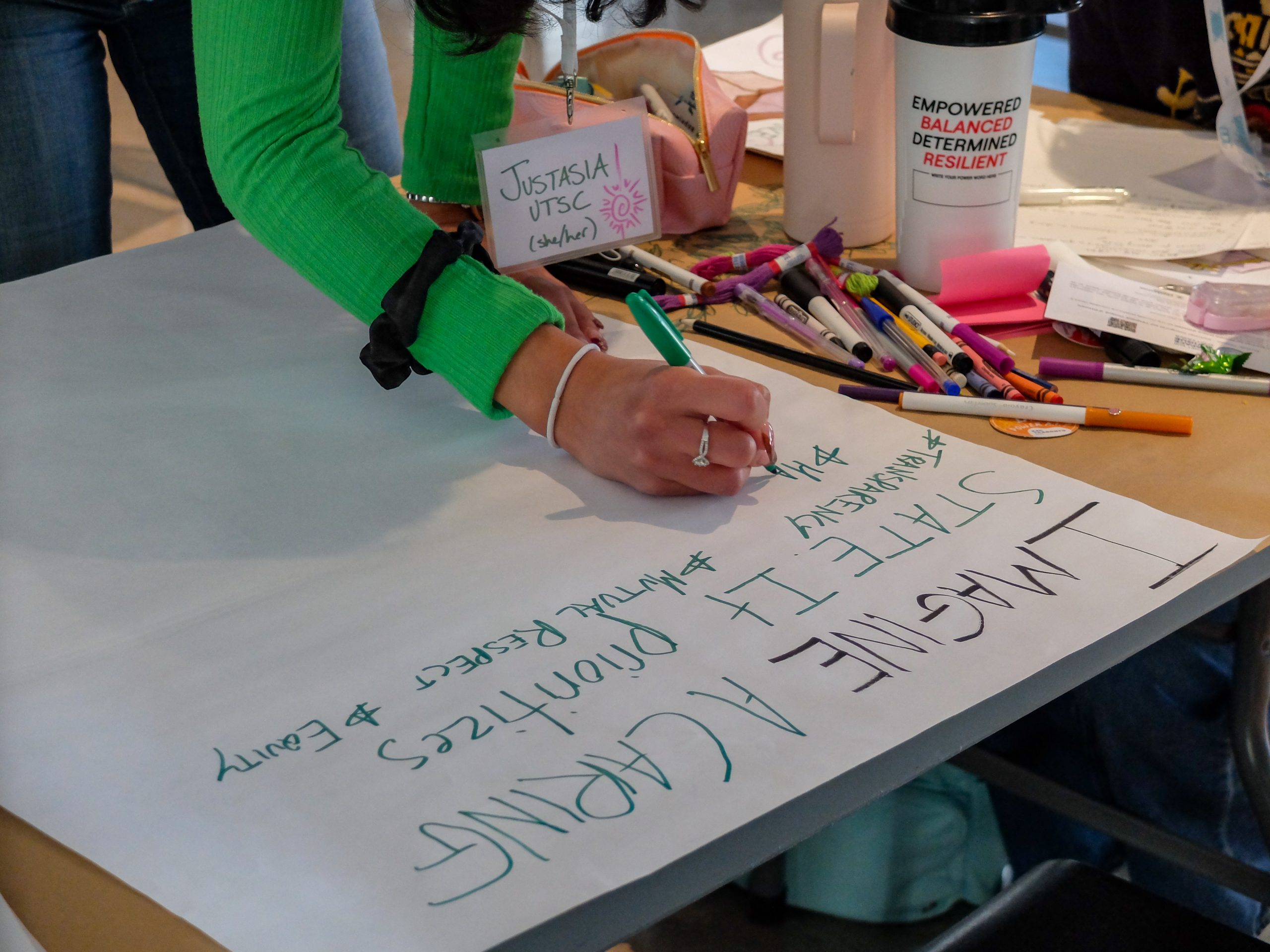
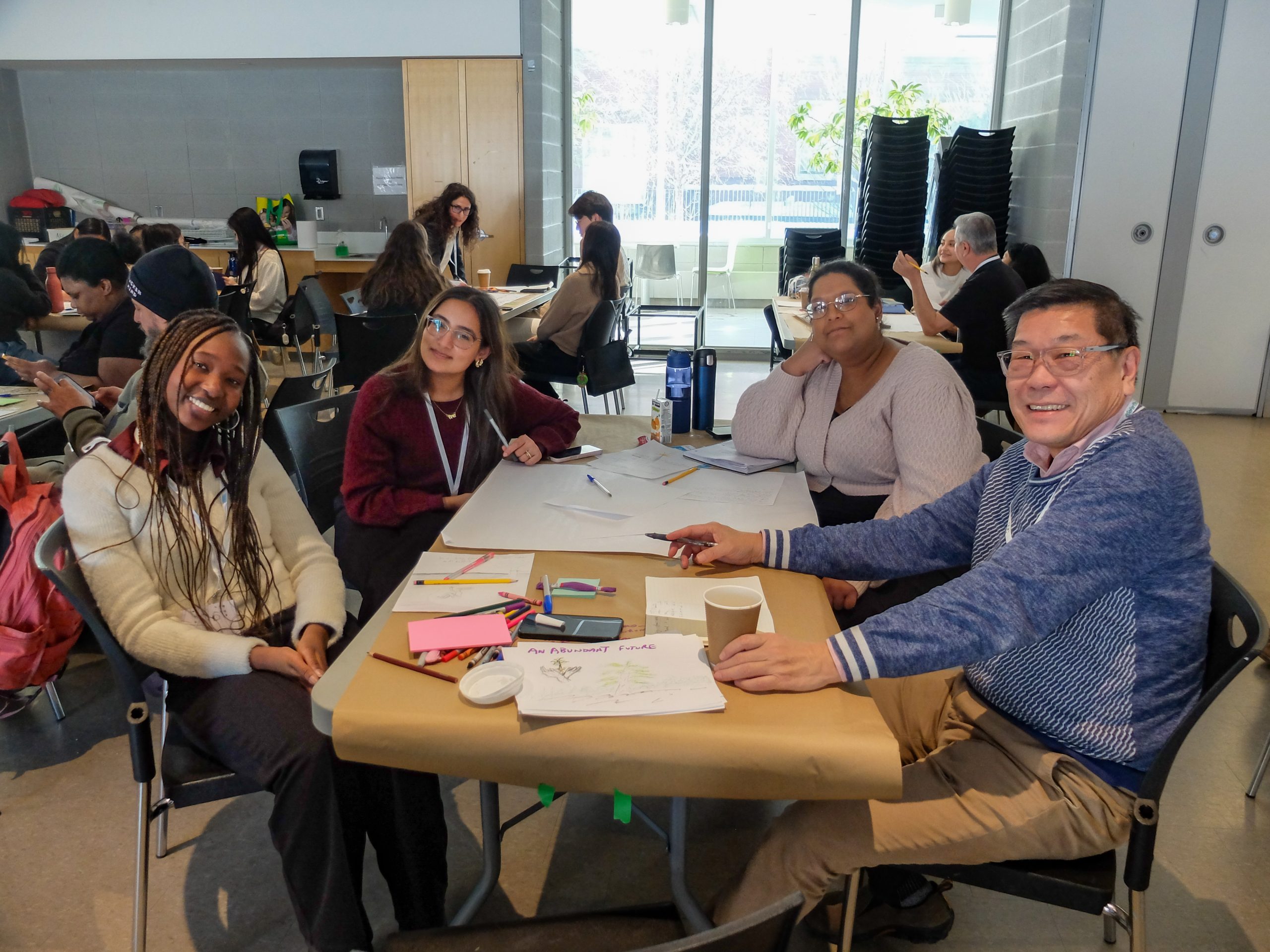
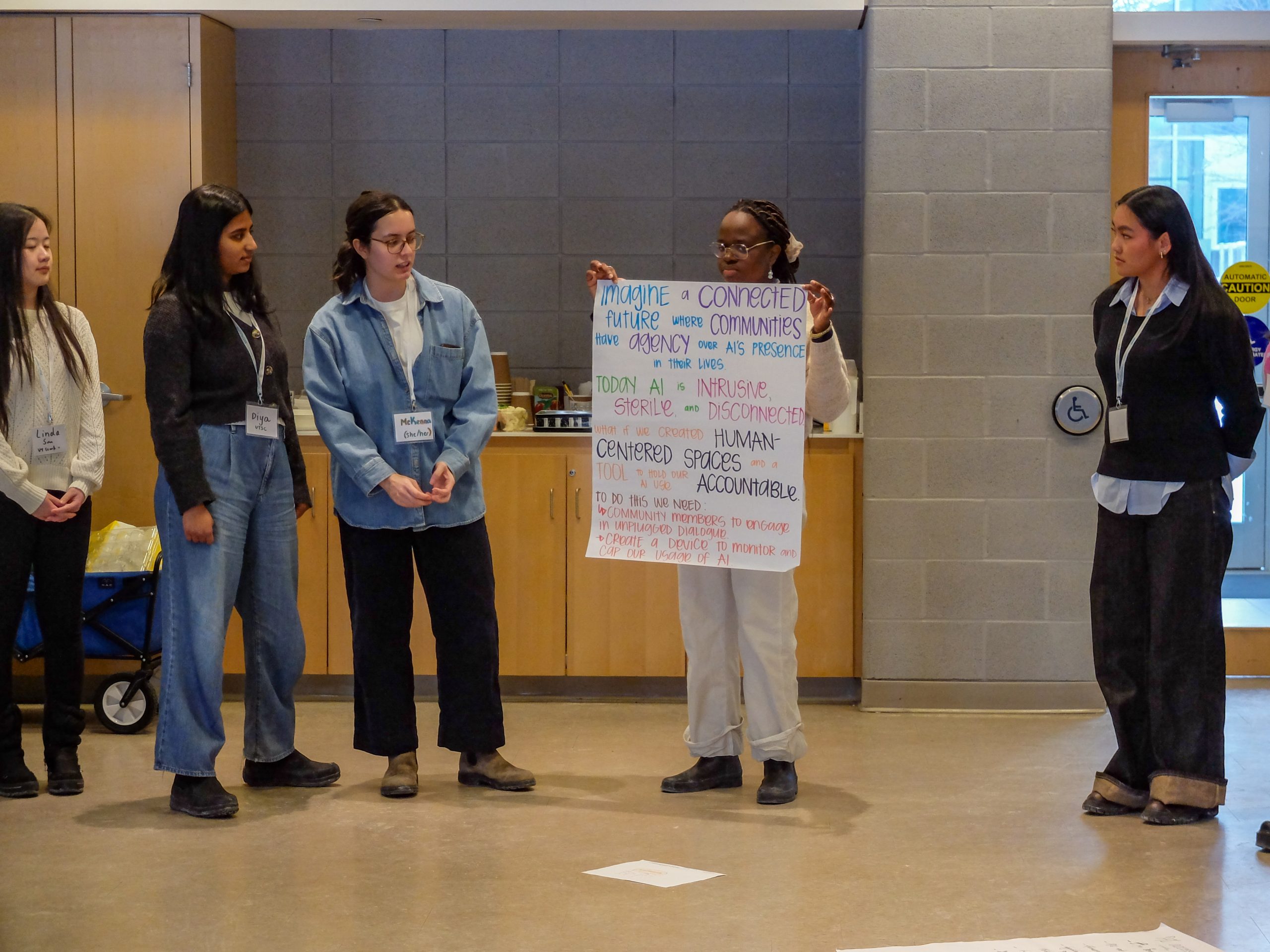
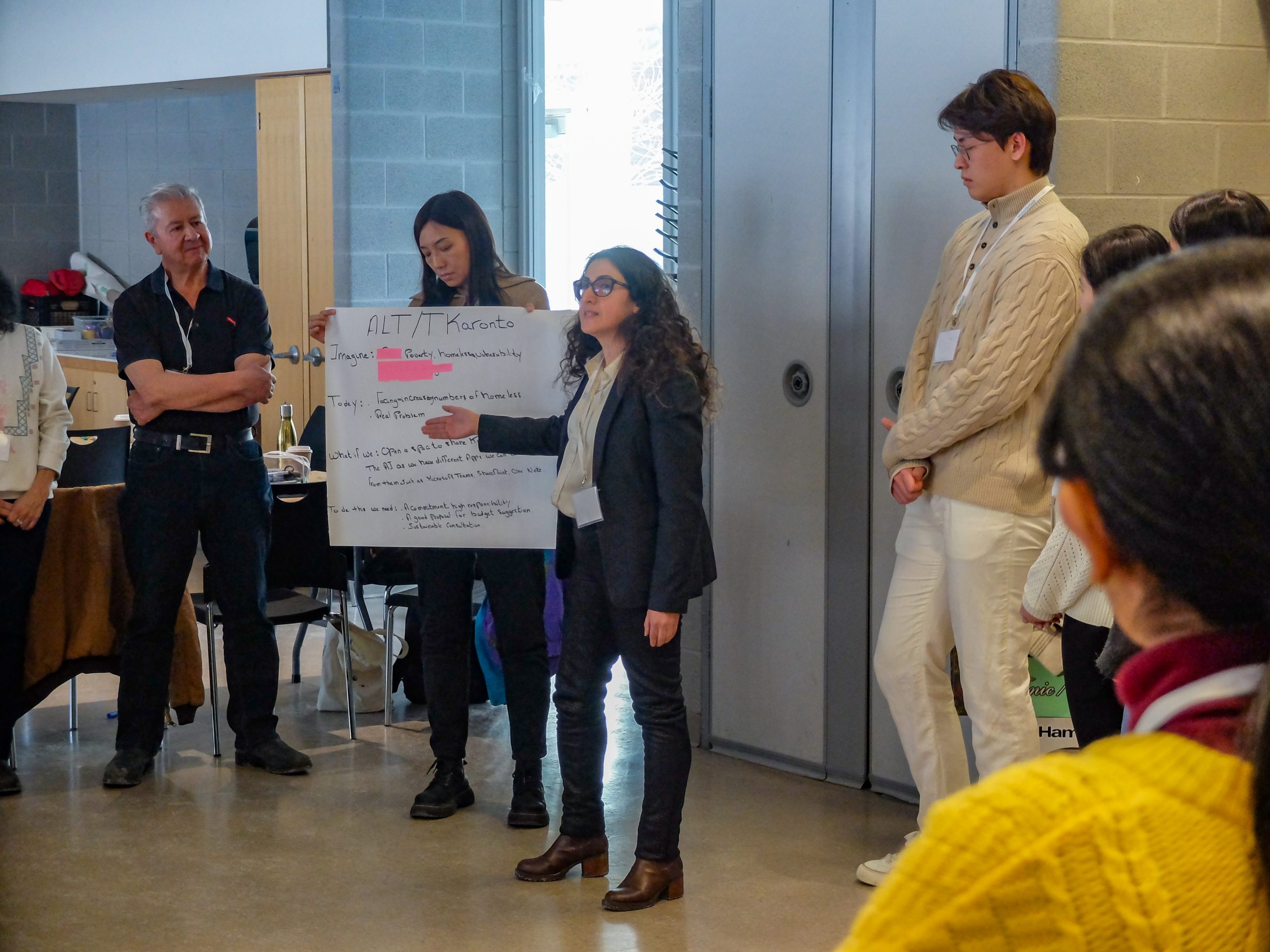
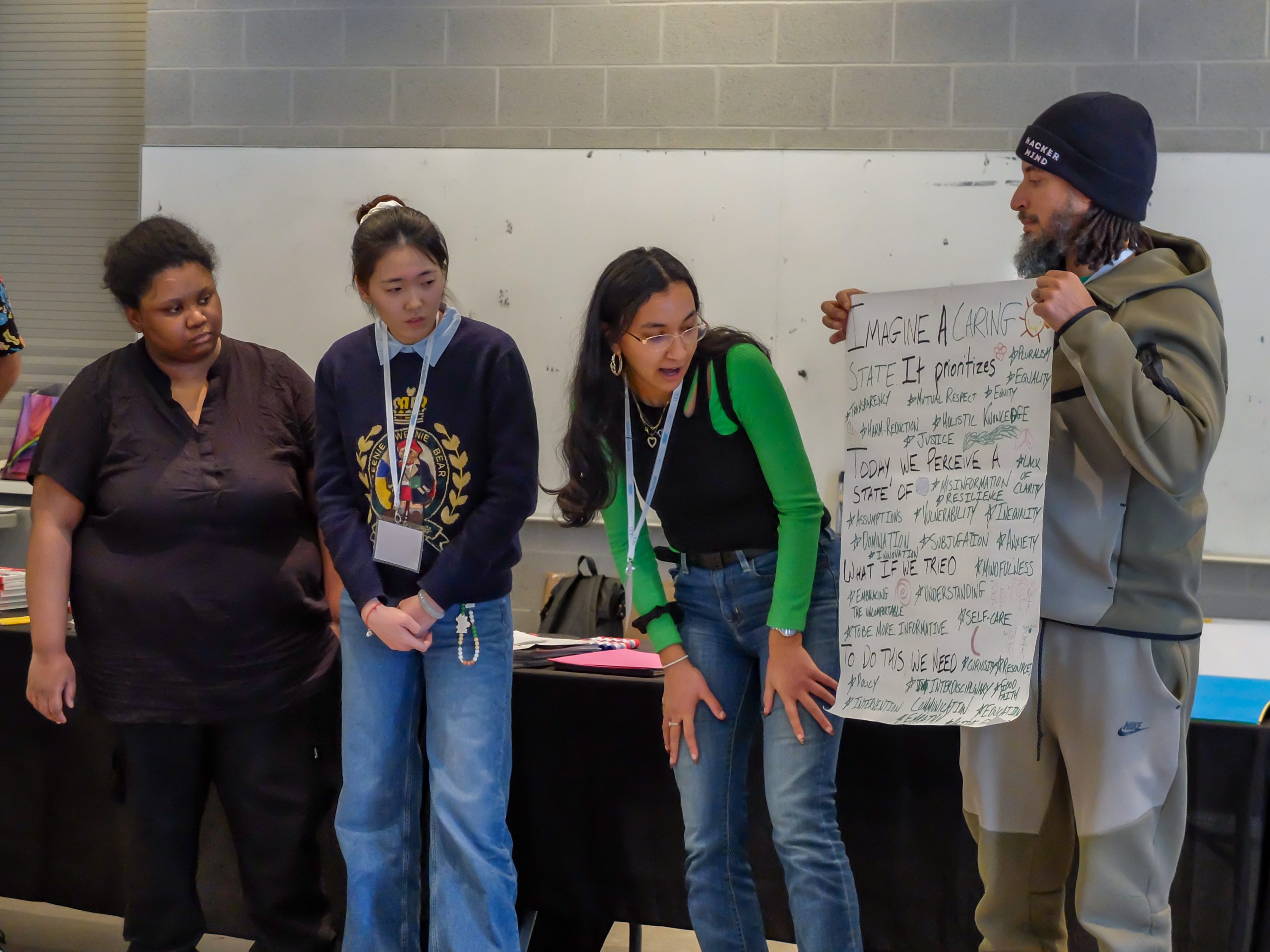
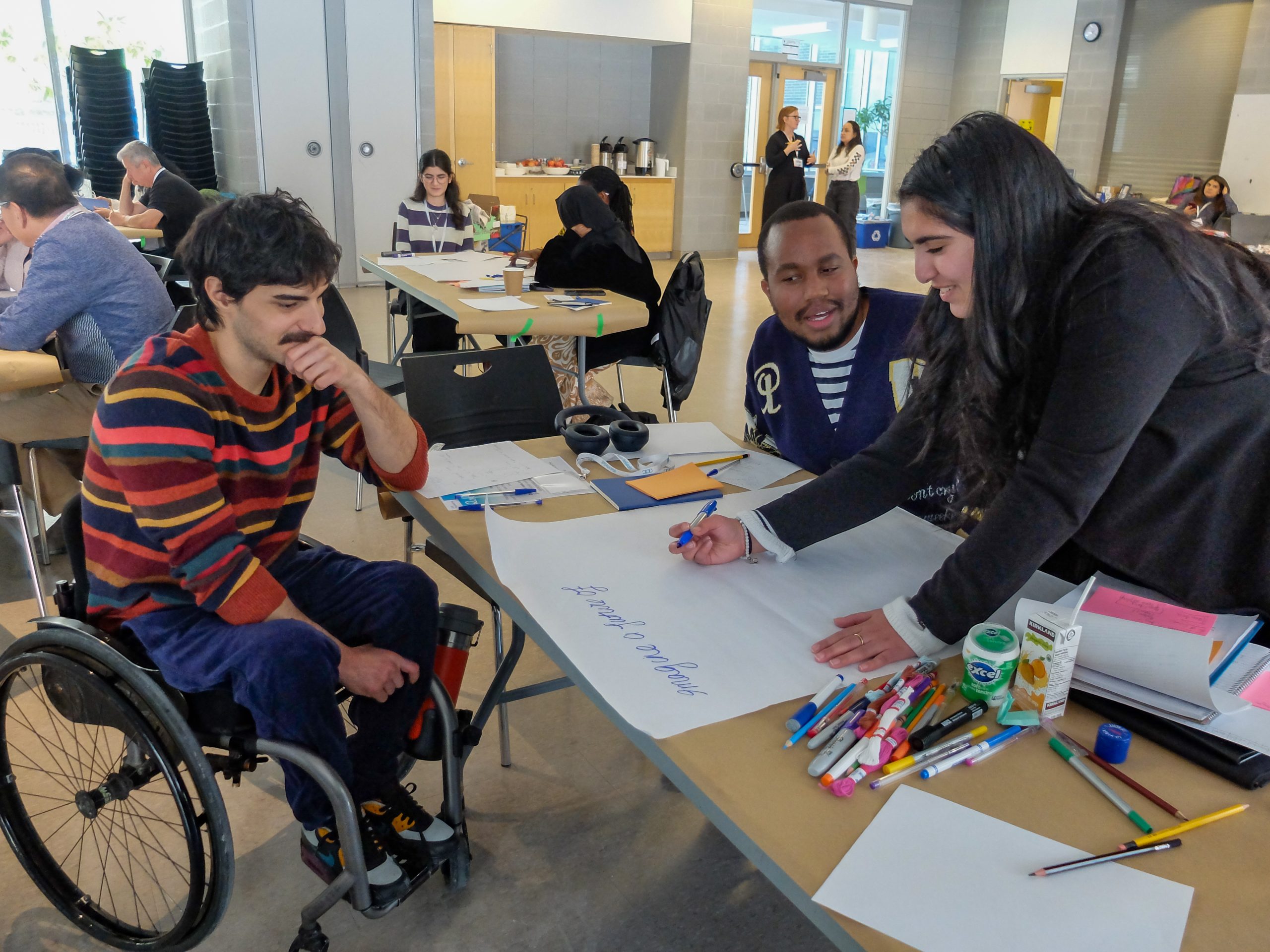
UTSC student and Innovation Lab participant Mckenna North shared, “At a time when AI discourse can feel overwhelming and deeply pessimistic, the sprint offered a way to stay grounded and positive, while still being critical. It felt like taking a first, necessary step towards the future we want to see; naming what that future looks like and identifying tangible actions we can start taking right now.”
We closed the lab with a creative resistance zine-making session with Karen Natalia Villanueva, inviting participants to translate their reflections into zines that gathered the ideas, tools, and methods they hope to carry forward in resisting the “inevitability” of AI. Participant Riya Osti shared, “While zine-making can serve as a powerful tool for expressing our concerns, it is equally important to treat the session as a space for disconnecting from a world increasingly reliant on AI. From my observations, the timing of this session was especially effective, as it concluded the day’s activities by allowing participants to decompress, reflect and create.”
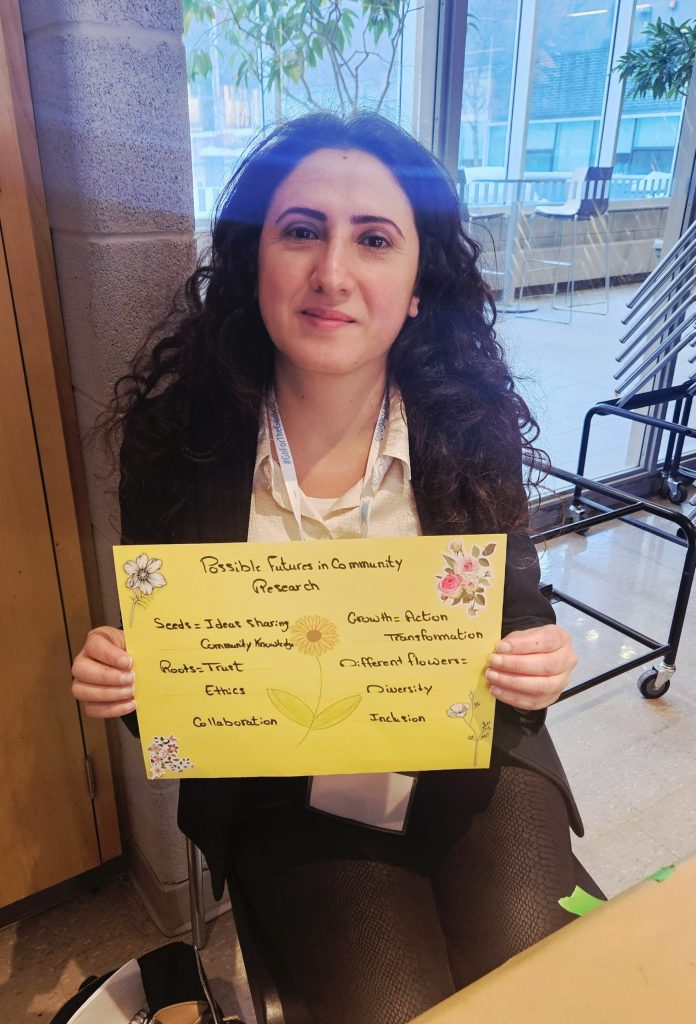
The Innovation Lab was a meaningful chance to gather in community amidst our increasingly technologically mediated lives. The embodied knowledge participants shared became a powerful beginning to a larger conversation on community centered approaches to AI. We are so grateful to everyone who participated and hope to continue to build out our collective visions for the future together through our upcoming programming.
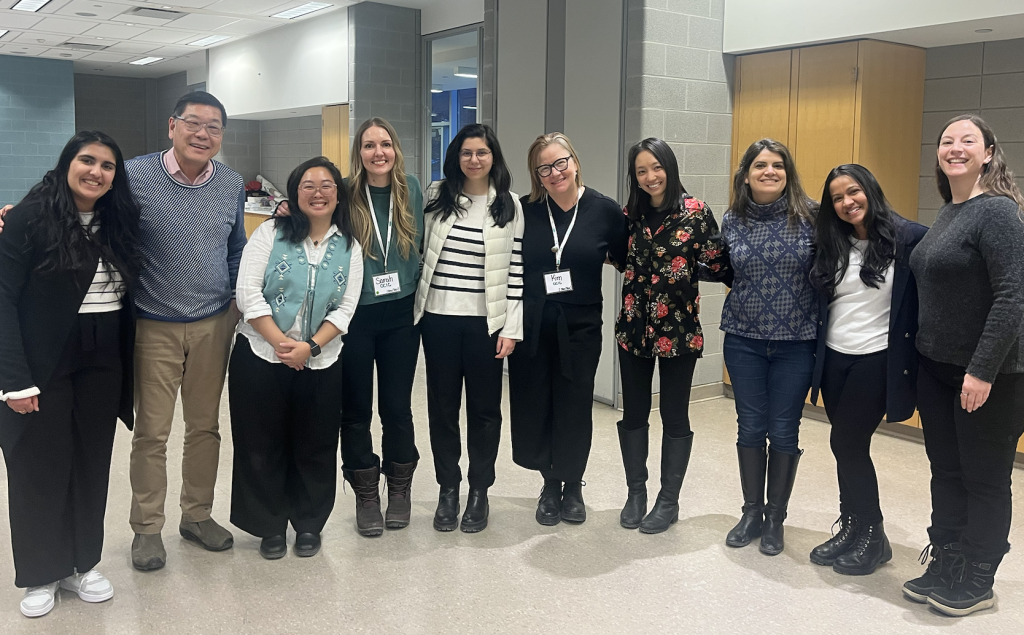
This lab would have not been possible without our amazing Knowledge 4 Change Tkaronto Hub partners: Elham Rasoulian at the Toronto Centre for Learning and Development and the Ontario Council for International Cooperation Team: Kimberly Gibbons, Shehara Athukorala, Mishka Watin, Pragya Tikku, Sarah Judd, Lisa Swainston, and associate of the Knowledge Equity Lab Jade Huang. Thank you all.
If you’d like to learn more about our programming or the people who came together to bring this lab to life, check out the participant package below: